Echoes of the 2011 Syrian Uprising in Europe:
Music, Protest, and Acts of Citizenship
Ioannis Christidis
Music and Minorities Research Center, University of Music and Performing Arts Vienna, Austria
Correspondence: christidis@mdw.ac.at
Abstract
This article investigates how Syrian political and protest songs contribute to enactments of insurgent, precarious, and transnational citizenship across the trajectories of the 2011 Syrian uprising, forced displacement, and resettlement in Europe. Drawing on multi-sited ethnographic research, combining online documentation of performances from the protests in Homs with hybrid fieldwork in refugee camps in Thessaloniki, Greece, and among Syrian diasporic communities in Vienna, Austria, it traces the heterochronic political life of three songs: “Jannah, Jannah, Jannah,” “Bi-ḥuzn wa-al-rīḥ taṣfar min warā al-bībān,” and “Ṣabāḥkun Ḥurriyyah – Roja û Azadî be.” Although each song emerges from a distinct political moment, their trajectories illuminate interconnected ways in which protest music mediates political agency across contexts of brutal repression, restrictive border regimes, and diasporic reconfiguration. By examining the discursive, sensorial, affective, and performative registers of these songs, and the multi-layered continuities that link them, this article shows how individuals who identify as Syrians sustain political agency and generate alternative imaginaries of political belonging and citizenship in response to the multiple forms of political exclusion they encounter. Finally, it calls for a politically attuned and ethically committed practice of listening, a politicizing mode of response that not only recognizes musical expressions by marginalized and disenfranchised individuals and groups as sites of political agency, but also positions ethnomusicologists as responsive agents rather than detached observers.
Introduction
Syria, December 8, 2024. The news broke in the early hours of the morning, causing jubilation. In a dramatic turn of events, the Assad regime in Syria, after more than half a century in power, collapsed. Opposition militias, which had taken control of major Syrian cities in the preceding days, reached and captured Damascus, forcing President Bashar al-Assad to flee to Russia. Within a matter of hours, Syrian social media platforms were flooded with images of toppled regime statues and flung-open prison gates, such as that of Sednaya prison, infamously called the “human slaughterhouse” (al-maslakh al-basharī), accompanied by reports of political prisoners being released.1
Austria, December 8, 2024. By afternoon, euphoria spills into the streets of Vienna. More than three thousand people have gathered in front of the State Opera and are now marching towards the Austrian Parliament. They wave flags of the Syrian revolution, distinguished by three horizontal stripes, green, white, and black, with three red stars on the white one. The demonstration is vibrant and resounding.2 Slogans and songs once chanted during the 2011 protests in Syria are now echoing in the heart of Europe. As the crowd reaches the area in front of the Austrian Parliament, young men form circular chains and break into dance to the rhythm of drums (see Figure 1). Beneath the statue of Athena, a group of men and women chant in unison: “Wāḥid, wāḥid, wāḥid – al-shaʿb al-Sūrī wāḥid!” (“United, united, united – the Syrian people are united!”), before bursting into collective song (see Figure 2). As the day progresses, the flag of the former regime, once flown at the Syrian embassy, is replaced by the flag of the revolution, a symbolic act marking the dawn of a new chapter in Syrian history.
Figure 1. Young men dance to the beat of a drum, holding revolutionary flags during the festive demonstration in Vienna, celebrating the fall of the Assad regime on December 8, 2024 (photo by the author).Figure 2. At the same demonstration, a group of people sings revolutionary songs and shout slogans against the backdrop of the Austrian parliament and the statue of Athena (still from a video recorded by the author, see Christidis 2025
The events in Syria of December 8, 2025, can be understood as the culmination of a chain of developments that began in March 2011 with a popular uprising, following a broader pattern established by earlier uprisings in Arab-majority countries in North Africa, where mass mobilizations led to the ousting of long-standing authoritarian leaders and challenged entrenched regimes. The slogan “The people want the fall of the regime” (“al-shaʿb yurīdu isqāṭ al-niẓām”), already echoing in Tunisia, Egypt, and Libya, filled Syrian squares, disrupting what had long been described as the “kingdom of silence” (al-mamlakat al-ṣamt). Syrian protesters’ demands for “freedom” (ḥurriyyah) and “dignity” (karāmah), encompassed a wide array of objectives, including political reform towards democratization, an end to corruption, social and economic justice, and, ultimately, the overthrow of a brutal autocracy.
The Assad regime was established in 1970 through a military coup within the Arab Socialist Baʿath Party, known as the Corrective Movement and led by Hafez al-Assad. Ideologically grounded in Arab nationalism, secularism, state-led socialism, and anti-imperialism, the regime ruled Syria through an authoritarian framework, systematically suppressing a wide spectrum of dissent – including democratic, leftist, and Islamist movements – through imprisonment, torture, and execution. Moreover, non-Arab minorities, particularly the Kurds, faced cultural repression aside political exclusion (Sidki 2014). When Hafez’s son, Bashar al-Assad, assumed power in 2000, there was a resurgence of hope for political and economic reform, which came to be known as the Damascus Spring. However, these hopes were quickly dashed as authoritarian control was reasserted. During this period, a diverse opposition emerged, comprising civil society activists, human rights defenders, former Baʿathists, and moderate Sunni Islamists, which laid the groundwork for the 2011 uprising (Yassin-Kassab and Al-Shami 2018).
The regime’s violent crackdown on early protests in March 2011 provoked nationwide outrage, marking the onset of what a diverse constellation of opposition groups termed the “Syrian Revolution” (al-thawra al-Sūrīyah). By June 2012, the uprising had escalated into a full-scale civil war (UN High Commissioner for Refugees 2012), and by 2013, it had evolved into a complex and deadly proxy conflict involving a range of state and non-state actors whose agendas diverged sharply from the revolution’s original objectives. Over the ensuing decade, the death toll reached staggering levels, with estimates ranging from approximately 300,000 (UN Human Rights 2023) to over 600,000 (Syrian Observatory for Human Rights 2021). Since its outbreak, the Syrian conflict has displaced of over 14 million individuals from their homes. More than half remain within Syria, while the remainder have sought refuge in other countries (USA for UNHCR 2025). Beyond the region, over one million Syrians have relocated to Europe. In 2023, approximately 180,000 individuals held long-term residency status in EU member states; over 780,000 retained refugee status or subsidiary protection; and more than 300,000 had acquired EU citizenship (Davidoff-Gore and Fratzke 2024).
Just hours after the collapse of the Assad regime, several European countries, including Germany, Austria, the United Kingdom, Italy, and Greece, swiftly suspended asylum procedures for Syrians, which had been ongoing throughout the preceding decade. This sudden policy change highlighted the conditional nature of refugee recognition and its close connection to shifting political interests. It also underscored the persistent challenges faced by displaced Syrians, whose experiences of authoritarian repression, conflict, and forced migration have complicated their efforts to establish safety, social and political belonging, and the ability to enjoy rights on an equal footing with citizens.
Nevertheless, situated between a distant Syrian homeland and the social, political, and legal precarity of refugee contexts, many Syrians in Europe have continued, despite limitations on political rights, to exercise political agency and act as “citizens” without formal citizenship claiming rights across both local and transnational spaces. Such acts of citizenship, to borrow Isin and Nielsen’s concept (2008: 1–12), encompassed a range of spectacular, symbolic, and performative practices, with music serving as a particularly prominent medium, as exemplified in the mass mobilizations in Vienna on December 8, 2024. Yet, while it is widely acknowledged that music can shape how individuals express themselves as political actors, little scholarly attention has been devoted to understanding how these dynamics unfold in the context of Syrian displacement, particularly among those who sought refuge in Europe.
Centered on political and protest song, this article examines how individuals who identify as Syrians use music to negotiate belonging and assert rights under conditions of sociopolitical exclusion. Drawing on ethnographic accounts, it traces the trajectories and evolving meanings of these songs, from their emergence during the 2011 uprising, to their recontextualization in refugee camps and protests in Thessaloniki, Greece, and finally to their resonance in European cities such as Vienna. By addressing continuities and ruptures across these three heterochronic contexts, the article argues that protest songs function as symbolic resources, operating through discursive, sensorial, affective, and performative registers, which although fragmented, can activate individual and collective political agency, thereby contributing to the re-politicization of the experiences of those positioned at the margins of formal political life.
Theoretical Framework: Music as Political Expression
Music is inextricably linked to political expression, shaping and being shaped by cultural, everyday, and institutional processes through which power is being imagined, negotiated, and exercised in both democratic and authoritarian contexts. Central to these processes is music’s role in constructing and contesting the symbolic and material boundaries of national belonging. Through national anthems, folklore, and iconic artists, music mediates the emotional and symbolic frameworks through which individuals experience inclusion in – or exclusion from – the imagined community of the nation and the institutional structures of the nation-state (Biddle and Knights 2016; Bohlman 2004; Stokes 2023). At the same time, practices such as state censorship or the privileging of certain musical forms over others underscore the intricate interconnection between music and the struggle over hegemony in public life (Street 2012).
A second dimension of music’s entanglement with politics lies in its strategic use by both institutional and non-institutional actors to influence public opinion and mobilize political change. On the one hand, music is instrumentalized within institutionalized democratic processes, such as election campaigns, party messaging, and ideological influence. On the other, it plays a central role in grassroots social and political movements that challenge dominant power structures, often advocating for justice, recognition, and rights. In this latter context, protest songs occupy a particularly salient position. As Dillane et al. (2018: 1) note, the “intimate and sensuous activity of singing [protest songs] . . . has a power and persuasiveness beyond mere rhetoric,” and, drawing on Bohlman (1993), they argue for approaching such songs not merely as aesthetics or discourse but for their agentive capacities. These capacities emerge through embodied, contextualized performance – or performance events – that materialize how individuals and communities relate to their histories, experience their present lives, and envision alternative futures (Dillane et al. 2018: 6). As Street (2012: 1) succinctly puts it: “Music does not just provide a vehicle for political expression, it is that expression.”
Due to these agentive capacities, music serves as a critical medium for articulating political agency and negotiating belonging especially for individuals and groups excluded from normative frameworks of national belonging and citizenship, whether due to legal precarity, racialization, or systemic marginalization. Research shows that marginalized actors, including refugees, migrants, and ethnic, religious, sexual, and gender minorities, frequently use music to contest hegemonic narratives and institutional structures of exclusion, while asserting claims to cultural visibility, sociopolitical recognition, and political rights (Biddle 2012; Hemetek 2015; Martiniello 2019). In that sense, music is integral to what Yuval-Davis (2006: 204–206) calls the politics of belonging: the contested processes through which social, political, and symbolic boundaries of inclusion and exclusion are produced, legitimized, and resisted, equally influenced by social positions, emotional attachments, and political values. The interplay between music, political agency and belonging becomes even more pronounced under authoritarian, colonial, and apartheid regimes. Under these conditions, music can serve as a potent medium for resistance and dissent, enabling individuals – through subtle gestures or overt expressions – to critique power and imagine or enact alternative forms of belonging, both within and beyond the frameworks of the authoritarian state (see, for example, Brune 2015; Fischlin and Heble 2003; Schumann 2008).
To theorize how music mediates political belonging and agency, in both authoritarian and democratic contexts, the article posits the concept of musical acts of citizenship as an analytical lens. This concept resonates with recent developments within critical citizenship studies and the anthropology of citizenship. Political theorists Isin and Nielsen conceptualize acts of citizenship as deeds that
disrupt habitus, create new possibilities, claim rights and impose obligations in emotionally charged tones; pose their claims in enduring and creative expressions; and, most of all, are the actual moments that shift established practices, status and order. (2008: 10)
Such performative, disruptive acts enable marginalized groups and individuals to constitute themselves as political actors, while challenging the boundaries of inclusion and exclusion within institutional and normative citizenship frameworks. However, acts of citizenship emerge differently across political and cultural contexts and can be both inclusionary and exclusionary, affirming belonging for some while marking others as external to the political body of citizens.
In a similar vein, Lazar and Nuijten suggest that citizenship is constructed simultaneously from above, through legal and institutional frameworks, and from below, through everyday vernacular practices, emphasizing that “the study of citizenship requires an acknowledgement of ordinary people’s ways of resisting or accommodating such categorization as they build themselves as particular kinds of citizens” (2013: 5). Their work underscores the importance of ethnographic methods for capturing the context-specific, practice-oriented ways in which citizenship is negotiated and contested, extending beyond the legal status of being a member of a national political community. Related notions such as affective citizenship (Absaroka 2023; García 2015), musical citizenship (Kyratsou 2022; Stokes 2023), and sonic citizenship (O’Toole 2014; Al Kabbani and Western 2020) have been increasingly employed in music and sound studies to explore both the broader intersections of music and formal citizenship and the sensorial, affective, performative practices rooted in everyday political engagements of those excluded from or marginalized within dominant citizenship regimes. These multidimensional articulations between music, political agency, and citizenship acquire particular urgency and resonance in the context of the 2011 Syrian uprising, the ensuing conflict, and the mass displacement of Syrians.
The 2011 Syrian uprising for freedom and dignity, although possessing distinct characteristics, shared similar features with the broader Arab Spring movements. These movements marked a pivotal moment of mass political mobilization against authoritarian rule, generating new collective experiences of public activism and fostering emergent forms of political belonging that transcended and reconfigured pan-Arab, national, ethnic, tribal, gendered, religious, and ideological lines, ranging from liberal democratic visions to political Islam (Sadiki 2015). However, despite widespread mobilization, the absence of robust opposition structures, the persistent repression, and the fractured alliances among groups undermined the translation of street protests into radical political reforms. In addition, even though these movements challenged traditional gender roles in public spaces of protest, they also established opportunities for conservative gender ideologies, in some cases worsening conditions for women (Bayat 2021). In Egypt, authoritarian rule soon returned, while Tunisia’s democratic advances eroded over time. In Syria, after thirteen years of societal fragmentation, civil conflict, and proxy warfare, the Assad regime collapsed, giving way to a transitional government led by Ahmed al-Sharaa, a former Islamist militant, which has so far proved unable – or perhaps unwilling – to contain renewed sectarian violence and to advance democratic reforms.
From a Foucauldian perspective, which understands power as productive, relational, and inseparable from resistance, aspects of the Syrian uprising can be seen not merely as opposition to state authoritarianism, but as enactments and negotiations of existing social and political hierarchies within society. Within this framework, musical acts of citizenship – such as protest songs that combine political discourse with performative vocabularies of resistance – emerge as historically situated practices that both reflect and reshape the contexts in which they occur. The study of such practices offers the opportunity to reveal underlying hierarchies and moral values that shape social relations at large: what anthropologist Abu-Lughod (1990: 42) terms a diagnostic of power. This approach, she argues, avoids romanticizing resistance as pure liberation, emphasizing instead that social change is simultaneously constrained and enabled by pre-existing macro- and micro-level power relations.
Following this thread of thought, this article addresses protest song as more than a mere artful articulation of political dissent and resistance. Drawing on McDonald (2025), protest songs can be understood as both means and products of political transformation: they draw on existing political discourses while simultaneously transforming those discourses in each act of performance, enacting “new oppositional knowledge, new structures of feeling, and new ways of engaging with the world” (McDonald 2025: 12–13). This article traces Syrian protest music along refugee journeys to explore how such transformative performances persist and adapt under conditions of displacement and new frameworks of sociopolitical exclusion.
Tracing the Impact of Syrian Protest Music in Refugee Contexts
For decades, the Assad regime subjected Syrian dissidents to systematic exclusion and extreme repression, silencing them through imprisonment, torture, and deadly brutality, while Syrian Kurds in particular were denied cultural rights as well. Although differing in scale, following displacement, many Syrians continued to experience various forms of coercion, as well as sociopolitical and cultural marginalization, within European refugee and integration regimes. EU border security policies, for instance, operate as technologies of violence, compelling people to take dangerous routes and risk their lives to seek asylum. At the same time, asylum and integration policies extend this violence through bureaucratic procedures, legal precarity, and practices of depoliticization and dehistoricization (Malkki 1996), as well as racialization rooted in entrenched colonial legacies (Picozza 2021). These mechanisms limit political agency and normalize precariousness, positioning refugees not as political subjects with distinct histories and intersectional experiences of oppression and resistance, but as passive recipients of humanitarian aid, subjects of state tutelage, and targets of state-led cultural integration strategies (Agier 2011; Schiocchet 2017).
However, many Syrian refugees in Europe have not only confronted institutionalized forms of disempowerment through protest mobilization but, as I will show later, have also used music – particularly political and protest songs – to re-politicize their narratives of displacement, resist marginalization, and assert their social, political, and cultural rights. This argument builds on my earlier work on the musical practices of Syrian forced migrants residing in refugee camps in Thessaloniki, Greece, which examined how songs rooted in Syrian protest traditions were performed by camp residents to confront the European border regime and their enforced immobility (Christidis 2022). While that contribution framed these performances as musical acts of citizenship, it did not fully explore the specific songs that resonated most strongly among Syrian migrants, nor the discursive, sensorial, affective, and performative dimensions through which those songs and their performers imagined and enacted alternative forms of citizenship.
This article seeks to answer these more nuanced questions by revisiting that material through an expanded analytical lens: one that situates these musical practices not only within the trajectory of the refugee journey but also in relation to their origins in the 2011 Syrian uprising and their subsequent rearticulations in European resettlement contexts. By treating these phases as interconnected, it traces how political and protest songs mediate the complex relationship between music and the politics of belonging – both in Syria and in new potential homelands – while drawing from and reshaping a repertoire of musical acts of citizenship. In doing so, this article addresses a critical gap in existing scholarship on the role of politically charged music in contexts of Syrian displacement.
While a substantial body of interdisciplinary work has examined the role of protest songs in expressing dissent and encouraging collective action during the Syrian uprising (e.g., Athamneh and Sayej 2013; Bader Eddin 2023; Cooke 2017; Dubois 2013; Halasa, Omareen, and Mahfoud 2014; Issa 2018; Parker 2018; Pearlman 2017; Silverstein 2024; Vicente 2013), less attention has been paid to the trajectories of these songs within refugee and migration contexts. One reason for this gap lies in the tendency of existing scholarship on Syrian music and musicians in Europe (Brunner 2022; Kyratsou 2023; Parzer 2021; Parzer and Mijić 2024; Präger 2018) and Turkey (Habash 2021; Öğüt 2021a; Shannon 2019) to frame musical practices primarily in relation to the socio-political dynamics of resettlement contexts, including local refugee and integration policies and dominant political and media discourses. Studies such as Kurtişoğlu et al. (2016) and Öğüt (2021b) do address political continuities in the musical expression of Syrian migrants, but only as secondary considerations within broader ethnographic inquiries into music and migration. While this scholarship offers valuable insights into the adaptive and socio-cultural dimensions of music in the various contexts of Syrian migration – particularly as they intersect with forms of (inter)cultural and social capital shaped by gender, class, sexuality, and ethnicity – they offer less insight into how music operates as a political and symbolic resource, rooted in prior struggles and overlapping histories of dissent.
In particular, little is known about how Syrian political and protest songs are sustained, adapted, transformed, or re-mobilized throughout processes of displacement, and how they are used to articulate claims to rights, political belonging, and forms of citizenship. Beyond my own earlier contribution (Christidis 2022), the study by Boswall and Al Akash (2017) of protest songs among Syrian refugee women in northern Jordan is particularly noteworthy, demonstrating that these songs function as tools of political empowerment imbued with gendered significance, rather than as mere cultural expression. Through private listening practices, often via mobile phone playlists in the solitude of exile, these women not only preserve their sense of self and emotional resilience but also participate imaginatively in the very uprising from which they were excluded, having been relegated from public to domestic spaces under the weight of authoritarian repression, before eventually fleeing. Similarly, Al Kabbani and Western (2020) foreground the political function of music and sound through their focus on Syrian activists-turned-refugees in Athens, Greece. Among several examples, they document and analyze the use of Syrian political songs in a music protest at Syntagma Square in 2019, held in memory of the late Syrian protest singer Abdul Baset al-Sarout. They argue convincingly that such public sonic performances transform urban spaces into generative sites of transnational activism and emergent forms of urban citizenship.
Building on and extending these approaches, this article traces the evolving political life of Syrian protest songs across diverse sites of performance: from the streets of Syria under sniper fire, to migratory routes and dehumanizing refugee camps, to contexts of restricted formal citizenship, as well as across digital exile networks. These contexts are indicative of the insurgent imaginaries and political claims embedded in the songs, serving as entry points into the discursive, sensorial, affective, and performative registers through which Syrians affiliated with the anti-Assad opposition mobilize political agency and enact alternative forms of citizenship and imaginaries of homeland, across both Syrian and European contexts.
However, as cultural theorist El Zein (2017: 88–90) warns, focusing solely on explicit political meanings or on spectacular acts such as protests, valued for their “agent-revealing capacity,” risks reinforcing narrow, normative, and Western-centric understandings of politics. Such an approach can render certain subjects invisible and obscure the more mundane processes through which individuals adopt political positions or take action (ibid.). Acknowledging this critique, my focus on explicitly political Syrian songs is not intended to discount musical expressions that demonstrate individual and collective agency in subtler or less public ways. Rather, this focus responds to a notable gap in scholarship on Syrian music in migration contexts, where politically charged and protest songs, despite their enduring resonance for many displaced Syrians, remain largely overlooked.
In the following sections, the analysis unfolds around three songs, each situated within distinct temporal and spatial contexts, accompanied by brief biographical profiles of their performers, along with their personal accounts where available: (a) “Jannah, Jannah, Jannah” (“Paradise, Paradise, Paradise”), performed by Abdul Baset al-Sarout and sung by hundreds during a protest in Homs, Syria (2011); (b) “Bi-ḥuzn wa-al-rīḥ taṣfar min warā al-bībān” (“In Sorrow, the Wind Whistles Behind the Doors”), performed by Ismail Gadaan during demonstrations in Thessaloniki, Greece (2016); and (c) “Ṣabāḥkun Ḥurriyyah – Roja û Azadî be” (“Good Morning, Freedom”), performed by Salah Ammo in Vienna, Austria, a city with significant Syrian presence (from 2014 onwards). The empirical data derive from original multi-sited fieldwork conducted in Thessaloniki, Greece (2016–2017) and Vienna, Austria (2019–2024), including audiovisual documentation, participant observation of public performances, analysis of online performances on YouTube and Facebook, and interviews with Syrian amateur singer Ismail Gadaan; Syrian Kurdish musician Salah Ammo; and two anonymized amateur singers of Syrian origin.
Enactments of Insurgent Citizenship: Performing “Paradise” in the Streets of Syria
Homs, Syria, December 30, 2011: A mass protest unfolds on the edge of al-ʿUlū park in the Khalidiya district. A video recorded by media activists and uploaded to YouTube offers a poignant glimpse into the event (see AhfadKhaled 2011a). Protesters wave the Syrian revolutionary flag and hold banners denouncing the Assad regime. In the area of the gathering stands a replica of the Kurjiyah clock tower, serving as a reminder of the original located in Clock Square (Sāḥat al-Sāʿah) in the city’s historic center. Earlier that year, Clock Square had become the epicenter of protest and was renamed Tahrir or Liberation Square by demonstrators, echoing its Cairo counterpart and underscoring the transnational resonance of the Arab Spring (Ya Libnan 2011). After a deadly regime crackdown in April, the square was cleared and sealed off (Al Attar 2014). In response, protesters in Khalidiya erected their own symbolic clock tower, reclaiming public space and asserting their right to the city and to free expression.
This symbolic spatial reclamation was accompanied by an equally powerful sonic and embodied one. To the 4/4 beat of a ṭabl drum,3 a protest singer, identified in the video as Abdul Baset al-Sarout, leads the crowd in chanting a protest anthem, known as “Jannah, Jannah, Jannah” (Paradise, Paradise, Paradise; see AhfadKhaled 2011a: 0:38):4
Jannah Jannah Jannah
Paradise, paradise, paradise,
Jannah yā waṭanā
oh, our homeland, you are a paradise.
Yā waṭan yā ḥbayib
Oh, our beloved homeland,
Yā bū trāb il-ṭayyib
the one with the gracious soil,
Ḥattā nārak jannah
even your hell is a paradise
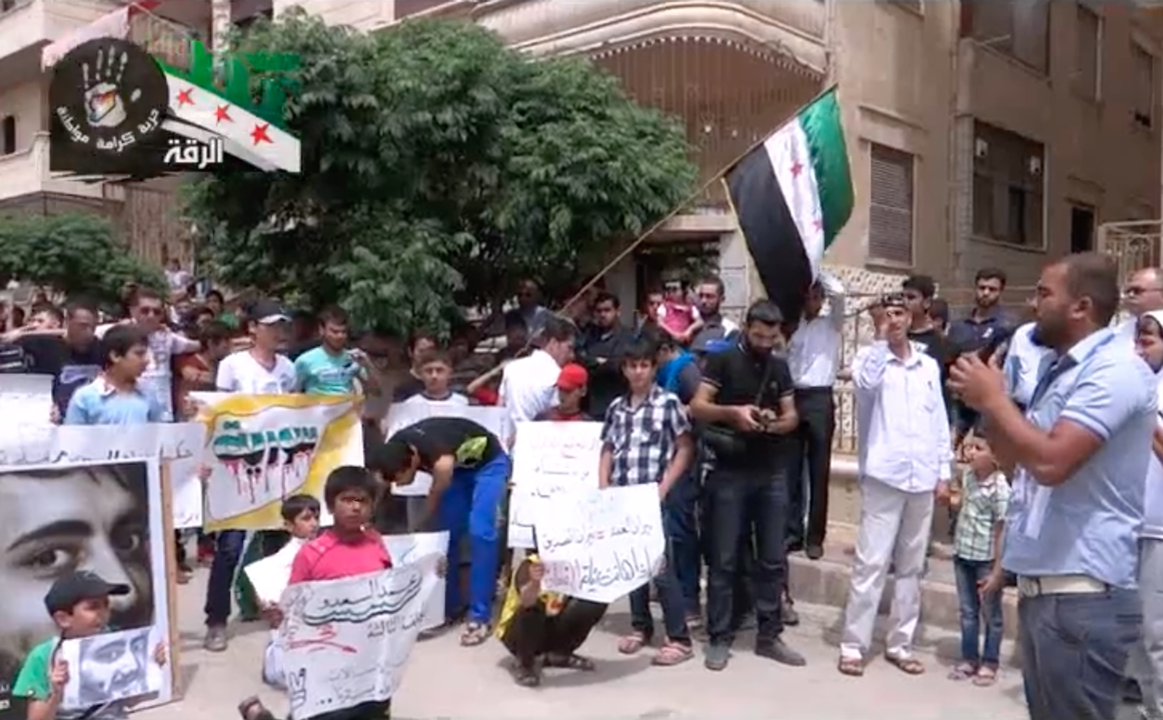
The crowd, composed almost exclusively of men, responds with fervor. They form concentric circles with hands interwoven above their shoulders (see Figure 3), swaying left and right or jumping in unison. They sing the typical chorus “Jannah Jannah Jannah / Jannah yā waṭanā” along with Al-Sarout, who stands on a heightened podium, moving his body in a similar swaying manner. After each verse, they utter a resounding “Eeee,” a piercing exclamation that signals their shared attachment to the meanings conveyed in the lyrics.
Figure 3. Stills from the YouTube video “Homs, Syria, 30 December 2011: The Khalidiya sit-in on the ‘Friday of the march to the squares,’ with Abdul Baset Al-Sarout, and ‘Paradise, oh our homeland’” uploaded by AhfadKhaled (2011a). The still image on the left (2:47) shows a dance circle formed inde-pendently within the assembled crowd. The still image on the right (2:58) shows the entire crowd forming concentric circles, swaying left and right to the rhythm of the song, surrounding the replica of the Homs Clock Tower (stills created by the author).
The melody and title of “Jannah, Jannah, Jannah” draw on an earlier eponymous Iraqi patriotic song intended for children, first performed by popular singer Riḍā al-Khayyāṭ in 1982.5 A later version was popularized by Iraqi-Saudi pop star Mājid al-Muhandis in the 2000s. Al-Sarout’s rendition retains the widely recognized chorus but adapts the remaining lyrics to voice the aspirations of Syrian protestors to overthrow the Assad regime, exemplifying the repurposing of familiar musical material for political ends. These new lyrics, later attributed to Ayman al-Masri,6 an amateur songwriter from Homs, provide a crucial entry point into the song’s political discourse and the imaginaries it evokes.
The central rhetorical device, evident in the original song’s title, is the portrayal of the homeland (waṭanā) as paradise (Jannah). In the adapted Syrian lyrics, this metaphor is reconfigured to underscore the intertwining of patriotic and religious devotion, which is seen as crucial for sustaining an ethos of national unity, struggle, and personal sacrifice. The homeland is thus imagined as an idealized space extending across both this world and the hereafter. The new lyrics further construct a vision of a united and rebellious Syrian nationhood rooted in the cumulative actions of its potential citizens, assembling a mosaic of specific Syrian cities and their communities, and honoring their roles and sacrifices in both the 2011 uprising and earlier revolts. For instance, Sham (Damascus) and Homs are referenced as sites of ongoing protests, while Hama is indirectly memorialized for the infamous 1982 massacre, when the Assad regime brutally crushed an Islamist-led uprising, killing an estimated 20,000 civilians. According to Yassin-Kassab and al-Shami (2018), this event left a profound traumatic imprint on the Syrian collective memory, rendering dissent almost unthinkable.
The emphasis on the spread of protests across diverse regions highlights the imperative of solidarity in the struggle, a notion also reflected in one of the primary protest slogans: “Al-shaʿb al-Sūrī wāḥid” (“the Syrian people are united”). This unity was further enacted through the participatory performances of “Jannah, Jannah, Jannah” in the Syrian squares. Reflecting on this experience, a young Syrian singer I interviewed in Austria explained that the performance of the song
is more like how to get the people to be a group. To be one group. . . . Or how to make people agree that they are one group. That we are all the same and we are here for one reason, and music helps us to unite. (Anonymous A, interview, March 2021)
The affective experience of “becoming one” – a shared sense of emotional and social unity through participatory musical performance and public ritual – has been a recurrent theme in ethnomusicological scholarship (see Rahaim 2019). Turino (2008) emphasizes the political power of such participatory performance, describing it as a deeply social, affective and embodied practice that, by forging solidarities among strangers, can catalyze both progressive and regressive political movements. This dynamic is evident in the Syrian protests as well. Indeed, as Wedeen (1999: 6) has shown, prior to 2011 mass public “demonstrations” and choreographed “rituals of obeisance,” organized by the regime rather than emerging spontaneously, were used to establish a sense of unity and nationhood through the performance of loyalty to the “leader-father” of the nation. Whereas Wedeen highlights top-down, regime-orchestrated performances, Turino (2016: 298) stresses that participatory music and dance can drive habitual social change at the grassroots level, enabling individuals to experience collective bonds and enact shared values in opposition to dominant norms. This, in turn, fosters alternative visions of social and political life and cultivates embodied forms of citizenship (ibid.). In the case of Syria, these alternative visions – widely conceived as freedom and dignity – were first embodied in people’s very presence on the previously fear-filled streets of the “kingdom of silence,” and even more vividly through participatory chanting and movement that openly defied the regime.
The mass public performance of “Jannah, Jannah, Jannah” in Khalidiya, Homs, reflected a pattern that appeared in many other Syrian cities during the 2011 protests and was not limited to this particular song. Numerous online videos, as well as testimonies from protesters collected by Syrian and non-Syrian activists, journalists, and researchers, vividly capture the musical and celebratory atmosphere of these demonstrations (see, for example, Al Kabbani and Western 2020; Pearlman 2017; Silverstein 2024). Like “Jannah, Jannah, Jannah,” such protest songs drew on pre-existing popular music melodies and folk poetic forms (Omran and Haji 2014). In some cases, they even adapted patriotic anthems originally created by the regime, subverting them to reflect the spirit of the demonstrations (Bader Eddin 2023). These songs preserved the vernacular language and local Syrian Arabic dialects, providing an accessible and intimate form of cultural expression (Dubois 2013). Their tone was often defiant yet playful, marked by humor and satire, openly mocking and cursing the Syrian dictator, critiquing his policies and brutality, and rejecting state narratives that framed the protesters as Salafist extremists (Issa 2018).
According to Omran and Haji (2014), a prominent genre was the ʿarāḍa, a participatory singing tradition associated with weddings and festive social gatherings. Typically involving a male lead chanter and a chorus, the ʿarāḍa’s call-and-response structure proved especially well-suited to protest contexts. Its format enabled the spontaneous creation and quick memorization of slogans and chants, fostering active engagement among large crowds. Accompanied by rhythmic percussion instruments such as the ṭabl or the goblet-shaped drum known as the darbuka, the ʿarāḍa cultivated a participatory atmosphere that encouraged mass chanting, clapping, and synchronized movement, intensifying collective emotional and physical attunement. Similar participatory patterns also emerged in performances beyond the ʿarāḍa tradition.
This call-and-response format of Syrian protest songs, which assume a lead singer and a chorus of protesters, embodies what Stokes (2023: 16) describes as an “ideal of citizenship as communicability,” whereby citizens speak, listen, and “resound” in assembly. In this sense, collective singing in Syrian protest squares can be also understood as an auditory enactment of citizenship, a process through which protesters simultaneously voice and hear themselves, reaffirming in that way their collective power through their own affective audibility. As one research participant and protest singer noted: “You need many people to perform ‘Jannah, Jannah’ properly” (Anonymous B, interview, October 25, 2016), which highlights the critical role of the assembled crowd in making a resounding impact, eventually breaking through the collective fear that had persisted among Syrians for decades.
Although participatory in nature, protest songs such as “Jannah, Jannah, Jannah” also highlighted the prominent role of specific individuals who acted as instigators and lead singers, such as Abdul Baset al-Sarout. Born in 1992, he was initially known as a talented football goalkeeper. At just 19 years of age, he rose to prominence as a leading voice in the peaceful protests in Homs. Figures such as al-Sarout, predominantly young men from working- and middle-class backgrounds, played a central role in shaping the symbolic landscape of the uprising as predominantly masculine, heroic, and rooted in a popular (sha‘bī) ethos, frequently articulated through religious righteousness.
Women, of course, were active participants in many protests, yet only marginally assumed leading roles. A notable and perhaps exceptional example is theater and TV actress Fadwa Suleiman, who, in another video of the same protest in Khalidiya, Homs, appears alongside al-Sarout on the podium, leading thousands of – seemingly exclusively – male protesters in anti-regime chants and slogans (AhfadKhaled 2011b). Coming from the Alawite sect and standing as a woman in a male-dominated protest space, Suleiman represented a unique revolutionary figure, simultaneously challenging sectarian rhetoric and gender norms.7
Nevertheless, it was male protest singers who became centrally imprinted in the collective iconography of the uprising as inspirational and heroic figures, in part because of their untimely deaths as martyrs (see Figure 4). Al-Sarout was one of them. As the uprising escalated into civil war in 2012, he transitioned from protest singer to a leading figure in the armed rebellion, serving as a commander during the protracted siege of Homs.8 Al-Sarout died on June 8, 2019, from injuries sustained in a battle with regime forces, at the age of 27. Following his demise, he was widely regarded as a hero across significant segments of the Syrian opposition, despite controversy surrounding his affiliation with extremist Islamist groups (Bulos 2019).
Figure 4. Mural painted in 2020 by the Aish Campaign (Live Campaign), a grassroot political art collective in Kafr Nabl, Idlib province, depicts Abdul Baset al-Sarout against the backdrop of the Syrian revolu-tionary flag. The message reads: “Blessed Ramadan. Despite the bleeding wounds, inevitably. . . Eid is coming” (“Ramaḍān mubārak. Raghma al-jurūḥ al-nāzifah,lābud. . . yalffī al-ʿīd”; artwork and photo credit: Aish Campaign [حملة عيش] 2020, with kind permission).
The posthumous legacy of Abdul Baset al-Sarout is inextricably tied to his singing performances during demonstrations in Homs. Yet his voice also lives on in a studio-recorded version of “Jannah, Jannah, Jannah,” uploaded to YouTube on May 17, 2012 (al-Sarout 2012), at a time when the uprising had already escalated into civil conflict. This rendition was produced by Wasfi Massarani, a Syrian singer, composer, and multi-instrumentalist from Homs, and an outspoken supporter of the uprising who had been based in the Czech Republic since 2000. The recording quickly became one of the most iconic anthems of the Syrian Revolution, resonating not only within Syria but also across diasporic communities aligned with the opposition.
Musically, the production blends synthesized, Western pop-influenced atmospheric instrumentation with guitar-like sounds, electric bass, and darbuka percussion in a four-part rhythm at 103 BPM. This arrangement introduces an alternative auditory grammar for revolutionary expression, diverging from both popular and folk genres as well as from the militaristic tone of conventional patriotic anthems. Yet the song’s impact appears to derive less from its musical structure than from the affective power of the lyrics and the voices that articulate them. Al-Sarout’s vocals are limited to selected stanzas, interspersed with contributions from other male and female singers, including Massarani himself. This vocal arrangement suggests a deliberate attempt to embody the plurality of the Syrian people. Moreover, while the lyrics remain largely consistent with those performed live in protests, they more explicitly foreground the theme of martyrdom (al-istishhād), marking a thematic shift that reflects the transformation of the uprising into armed rebellion.
While the themes of sacrifice and the celebration of martyrs also appear in the protest performance of “Jannah, Jannah, Jannah” in Khalidiya, the recorded and uploaded version of the song conceives martyrdom with more pronounced religious undertones, framing it as self-sacrifice for the homeland in exchange for paradise. This is articulated through a distinctly gendered lens: men appear as fighters and martyrs, while women assume roles as ritual mourners and supporters. Yet, rather than expressing grief through tears, women – particularly girls – are called to ululate in response to a martyr’s death, invoking the zaghārīd, a high-pitched, trilling vocal expression traditionally performed by women in Arab communities of Southwest Asia during celebratory events. This produces a festive register that sharply contrasts with the tragedy of loss, resonating with Palestinian political songs on martyrdom, which similarly intertwine funeral and wedding indices. According to McDonald (2010: 206–210), in the Palestinian resistance tradition, the young male martyr is often referred to as a bridegroom, and his funeral is symbolically framed as a “wedding to the nation” (ibid.: 206) while young men’s mothers are encouraged to celebrate their sons’ martyrdom as their ascendance into manhood.
In “Jannah, Jannah, Jannah,” the male martyr is promised khādimāt (servants) and ḥūriyyāt (houris), which are idealized celestial companions who are often feminized. According to patriarchal eschatological visions, these companions are rewarded to righteous men in the afterlife. This framing illustrates how revolutionary narratives reinscribe conventional gender roles, even while aspiring to radical political transformation. Nevertheless, the juxtaposition of sacrifice for the homeland with public celebration, and of martyrdom with divine reward, signals a broader ethos of resilience among those who choose to resist despite existential stakes. As Khalili (2007: 32) notes, such conceptions of martyrdom, also found in other nationalist and liberationist movements, should not be interpreted as a desire for death, but rather as a struggle to construct meaning in life, situating martyrdom within a framework distinct from death itself. In that sense, “Jannah, Jannah, Jannah,” and its reimagining of the homeland as paradise, is not solely eschatological, but also worldly: a place worth living for, dying for, and collectively reclaiming through struggle. Ultimately, performing “Jannah, Jannah, Jannah” in Syria’s squares, often under threat of arrest or death, became a radical enactment of political imagination and a powerful declaration that a free Syria was already underway, even as calls for structural change coexisted with enduring traditional social hierarchies and norms.
The protest anthem “Jannah, Jannah, Jannah” experienced a resurgence after the collapse of the Assad regime, in December 2024, when it was performed en masse in public squares across Syria and in diasporic protest sites in cities such as Vienna.9 Yet, as the following section will show, protest songs originally rooted in the streets of Syria had already become vital resources for political empowerment and mobilization among Syrian migrants on their way to Europe, especially within the harsh conditions in refugee camps in Greece.
Performing Citizenship on the Margins of Europe: Syrian Protest Songs in Thessaloniki Refugee Camps
Thessaloniki, Greece, July 21, 2016: A tourist bus carries approximately fifty residents of the Oreokastro refugee camp, both men and women, to the Aristotle University campus in the center of Thessaloniki. They are en route to participate in a protest titled “Migrants’ Pride,” calling for freedom of movement and improved living conditions in refugee camps. On the bus, a man – his name is Ismail Gadaan – stands out as he bursts into a slow-paced song. His voice conveys a sense of sorrow, yet his song finds a resonance with the majority of the bus passengers and fellow refugee camp residents, who are inspired to participate in the performance, either singing along or clapping in rhythm (see Audio Example 1: Christidis 2016).
Audio Example 1. Ismail Gadaan sings “Bi-ḥuzn wa-al-rīḥ taṣfar min warā al bībān,” July 21, 2016 (Christidis 2016).
Gadaan’s song, titled “Bi-ḥuzn wa-al-rīḥ taṣfar min warā al-bībān” (“In Sorrow, the Wind Whistles Behind the Doors”), recounts the story of the courageous high school students in Darʿā, Syria, who, in early March 2011, inspired by the recent ousting of Presidents Ben Ali in Tunisia and Hosni Mubarak in Egypt, spray-painted anti-regime slogans on their school walls, daring to challenge the Assad family’s authoritarian grip on power. Their subsequent arrest and mistreatment became a catalyst, fueling the nationwide uprising that followed. The lyrics read as follows:10
Bi-ḥuzn wa-al-rīḥ taṣfr min warā al-bībān
In sorrow, the wind whistles behind the doors,
Wa-lā hamsa tihiz b-shwq mabsamnā
no whisper stirs our lips with a smile.
Ṭalaʿnā zghār bas nktub ʿalā al-ḥīṭān
We set out young, to write on walls,
Wa-shufnā al-khayr min yammnā wa-lā marnā
we saw goodness close, yet never our own.
Ktabnā yasquṭ al-muḥtal warā al-khawān
We wrote “Down with the oppressor! Traitors behind!”
Wa jākum khayr qad aḥzān mā shufnā
And we knew only sorrow, while fortune came your way.
Khadhūnā min madārsnā b-lā istiʾdhān
They dragged us from our school without warning,
Wa ʿadhbūnā b-lā raḥma w-taṣāyyḥnā
tortured us mercilessly as we screamed.
Zughār iḥnā warākum yā nisil ʿAdnān
“Youth, we stand with you, oh, descendant of Adnan!”
Yuḍurbūnā w-yaqlaʿūna b-aḍāfarnā
They beat us and ripped our fingernails out.
The opening stanza evokes an aural emptiness and a sense of loss that haunts the public spaces of Darʿā. Instead of the familiar sounds of daily life – whispers and laughter – only the wind is heard, signaling fear, grief, and displacement, and reflecting the deep scars that state repression has inflicted on the city’s social fabric. The second stanza narrates these events from the perspective of the affected students, using the first-person plural to recount their torture in graphic detail. This perspective is then interrupted by the voices of supporters rallying behind the students, expressed through direct quotations embedded in the song’s narrative: “Youth, we stand with you, oh, descendant of Adnan!” This creates a kind of dialogue within the song, where the primary actors interact with their community, yet the state remains absent from this dialogical process, functioning instead as the embodiment of absolute terror. The reference to the Adnanites – a northern Arab tribal confederation traditionally believed to trace its lineage to Adnan, a descendant of the Prophet Ibrahim (Abraham) – serves as a call for solidarity grounded in generational pride and shared Arab heritage. In the third and fourth stanzas, the song continues with lyrics emphasizing an ethos of solidarity and unity across religious sects and tribes, and between genders:
W-ṭilaʿa ṣawtin yhizz al-qāʿ min Ḥūrān
And a voice arose, shaking the land of Ḥūrān:
Lā tubkūn wa-ḥaqkum mā naʿūfū aḥnā
“Do not cry and we will not give up your right.”
Wa Darʿā tṭlub al-fazʿah min al-Julān
And Darʿā calls for support from the Golan:
Yā ahl al-ghīrah wa al-shīmah tarā inbididnā
“Oh, people of valor and manners, see, they have slaughtered us here.
Trānā minkum wa bikum trānā khawān
Among you we stand, as brothers,
Lā Shīʿa wa lā Sunnah altifariqnā
neither Shiites nor Sunnis, nothing can separate us.”
Wa min Ḥimṣ al-buṭūlah ṭalaʿat al-niswān
And in heroic Homs, women rushed out,
Wa rā al-aṭfāl w-al-shybān tunsurnā
stood with us, children and young men.
Wa lā bāb bi-Ḥimṣ mā ṭālat-hu al-nīrān
No door in Homs was spared from the bullets,
Wa-ḥat bāb al-kanīsah wa bāb jāmiʿinā
not the church’s door, nor the mosque’s.
Wa-ḥat bāb al-nuzūḥ tskar b-ʿamdān
Even the door of escape was shut with bars.
Wa ḍal bāb al-qabur maftūḥ min raḥnā
Only the tomb’s door remained unsealed as we departed.
The motif of the door, introduced at the beginning of the song, emerges as an ambiguous symbol. Once tied to safety – whether the domestic threshold of the home or the spiritual refuge of churches and mosques – it becomes, under the regime’s violence, a signifier of entrapment and uncertain futures. Doors are now either pierced by bullets or barred shut, conjuring an ominous choice between violent death and the precarious possibility of escape, encapsulating existential despair among many Syrians: “Only the tomb’s door remained unsealed as we departed.” Before completing his singing, Gadaan made a brief vocal and lyrical improvisation, paying tribute to the various neighborhoods that rose up in Homs. He closed this improvisation by chanting: “I lay down my soul to Khalidiya and send my greetings to the proud youth of Syria” (“Wa-laka rūḥī fudwah li-l-Khālidīyah; wa-aḥlā taḥīyah minnī li-shabāb Sūrīyā al-ʾAbyah”), emotionally and mentally situating himself within the landscape of the uprising.
Gadaan was born in the city of Raqqa, which is located on the northeast bank of the Euphrates River. He was raised in a musically inclined family, with his father being an amateur singer, and his two brothers being composers of mawlīyā, a local genre of folk sung poetry. Gadaan himself showed an early interest in singing. Due to the absence of formal music education in his region, he developed as an amateur, primarily through dedicated listening to emotionally charged songs, labeled as ṭarab, via tapes, CDs, and radio broadcasts. Around the age of 15, Gadaan began singing at family gatherings, whether at barbecues by the Euphrates, in kebab shops, or even spontaneously at weddings. As he grew into adulthood, he started working at a shop that printed labels for clothes, but he continued to nurture his love of music as a hobby.
The outbreak of the Syrian uprising marked a profound shift in Gadaan’s life. Like thousands of other ordinary Syrians, he chose to join the protests, taking on considerable risks. He soon decided to channel his passion for singing to support sociopolitical change in his country. Gadaan became a protest singer, using the affective power of his voice to galvanize others in support of the declared cause. In an interview (July 21, 2020), Gadaan explained that people in Raqqa are very sensitive to music, a factor which renders it an integral part of every public gathering and social event. Protests are no exception, given their inherently social nature. Without music and singing, he described them as “cold” and “soulless,” emphasizing that music was not merely an accompaniment but a vital affective element that resonated with the crowd’s emotions while also motivating their participation (ibid.).
Gadaan’s involvement in the protests soon led to his arrest and detention by regime intelligence, during which he was subjected to torture for nearly a month. Upon his release, he was forced to sign pledges, including one prohibiting him from singing or participating in any future protests against the Assad regime. That restriction, however, did not last long. By March 2013, as the protest movement escalated into armed conflict, Raqqa became the first city to fall entirely under the control of Syrian opposition forces. In retaliation, regime forces launched aerial bombardments across the city, causing numerous civilian casualties.
During one such strike in May 2013, a young paramedic named Mohammed al-Saʿdo was killed while working in an ambulance to rescue civilians. His death sparked a protest outside his family’s home in the Thakana neighborhood. It was there that Gadaan once again found the courage to sing. He stood before the victim’s grieving mother and performed the song that would later become his signature piece during the Thessaloniki protest: “In Sorrow, the Wind Whistles Behind the Doors” (see Figure 5). Gadaan shared with me that while he himself created the melody, the lyrics were composed by his brother, Ahmed Gadaan.11 He added that, once he had finished performing, the mother of the martyr had asked him to sing his song again, which moved him deeply (Gadaan, interview, July 21, 2020).
Figure 5. Ismail Gadaan (on the right) sings “Bi-ḥuzn wa-al-rīḥ taṣfar min warā al-bībān” during a protest outside the family home of the deceased Mohammed al-Saʿdo (his photo is visible on the left) in al-Thakana, Raqqa, in May 2013 (still by the author from a YouTube video uploaded by Raqqa Rev 2013).
In November 2013, Raqqa fell under the control of ISIS, which soon declared the city the capital of its self-proclaimed “Islamic Caliphate.” Under ISIS rule, opposition fighters as well as civilians faced intense surveillance, and everyday life was radically restructured according to the group’s strict interpretation of Sharia law. Gadaan regarded both the Assad regime and ISIS as antagonistic to the democratic ideals he upheld. In 2015, he was detained and tortured once again – this time by ISIS – an experience that ultimately compelled him to flee to Turkey. Aspiring to reach a safer destination, he eventually arrived in Greece by rubber boat in 2016.
Unfortunately, Gadaan was among the approximately 15,000 people stranded in the border zone between Greece and North Macedonia after the closure of the Balkan route in March 2016. In May 2016, Greek authorities forcibly transferred these individuals into twelve hastily established camps on the industrial peripheries of Thessaloniki, located in abandoned factories, military barracks, and warehouses. While these camps were ostensibly designed to address refugees’ emergency needs, such as food and shelter, factors such as restriction of movement, prolonged bureaucratic procedures, deplorable living conditions, and media portrayals of refugees as threats collectively contributed to further victimization and marginalization. Surrounded by barbed wire and under constant police and military surveillance, they eventually functioned as mechanisms of forced immobilization, control, and sociopolitical segregation, reflecting the broader philosophy of European asylum policies. However, from the outset, these camps became sites of contestation, with their residents and their allies organizing protests to demand the reopening of borders and improvements in living conditions, transforming into what Turner describes as “hyper-politicized spaces where nothing is taken for granted and everything is contested” (2016: 1).
Gadaan was transferred to the Oreokastro camp, located 10 km from the city center. This camp soon gained a reputation for its dynamic community of young Syrian activists from various regions of Syria. This community not only organized and participated in protests but also actively sought roles in the camp’s management and distribution of aid. Gadaan quickly established a reputation for his vocal abilities and wide-ranging repertoire of both political and popular Arabic ṭarab songs. He performed for fellow camp residents, offering a form of emotional release amidst the daily hardships.
It is therefore not surprising that, on their way to the “Migrants’ Pride” protest in Thessaloniki’s city center on July 21, 2016, Gadaan’s fellow bus passengers sing along to his protest chant, warming up for what is to come. The bus arrives at midday at the Aristotle University campus in Thessaloniki, where a temporary camp has been set up by local and international refugee solidarity networks to facilitate the major protest planned for the day. The atmosphere is relaxed and communal, lunch is being served from a makeshift kitchen. A few women, who have come with their children, are resting under a tent canopy designated as a “women’s space.” At one point, Syrian activists set up a sound system and begin singing revolutionary protest songs. Gadaan joins in, repeating the song he had sung earlier on the bus, while gradually being surrounded by a growing number of young men.
Later in the afternoon, as the intensity of the sun begins to wane, approximately 4,000 people emerge from the campus and fill the streets of Thessaloniki. Among the crowd are more than five hundred individuals from nearby refugee camps, marching with banners and chanting slogans. A young man from Syria takes hold of the microphone connected to a mobile sound system, rigged inside the trunk of a car driving along with the demonstration. His voice cuts through the crowd as he alternates between Arabic, Farsi, and English, articulating and amplifying the collective frustrations of the demonstrators: “Ḥurriyyah, Azadî, Freedom Now!” and “Open the Border!”
When the demonstration reaches the area in front of the Helexpo International Exhibition Center, another participant plugs his mobile phone into the sound system and plays Syrian popular/folk dance music known as shaʿbiyyah. To an electrifying sound of the folk wind instrument mijwiz, accompanied by a pulsing dance beat, dabke12 dance chains quickly form on the street, with young men stomping their feet in rhythm, some whirling their t-shirts over their heads. The shaʿbiyya music continues well beyond the official conclusion of the march, spilling onto the university campus, where an impromptu celebration unfolds, weaving together residents of the refugee camps and transnational activists in spiraling dabke chains.
Similar protests, predominantly led by young men of Syrian Arab backgrounds, continued throughout the summer of 2016 both inside and outside the refugee camps of Thessaloniki, with music playing an integral role in such processes of “hyper-politicization.” Protest singers, such as Gadaan, drew on a revolutionary repertoire that echoed the discursive, sensorial, affective, and performative registers that had emerged in the streets of Syria, this time performed without the immediate threat of gunfire, imprisonment, or torture. In the context of displacement, protest songs took on new meaning, becoming a moral compass and an indicator of shared political ideals among camp residents, while also serving as a source of empowerment for new forms of collective struggle. By promoting a sense of unity and common purpose, especially among young Syrian men who actively represented and advocated for the demands of camp communities, the performance of these songs can be understood as re-politicizing acts of citizenship – acts that affirmed the political agency of individuals trapped in EU refugee camps and therefore challenged their position as passive recipients of humanitarian aid.
However, unlike Syria, where protest songs were primarily directed at local audiences and often sparked large-scale chanting and collective movement, in Thessaloniki these performances involved only a small number of young Syrian men, as their audience was predominantly non-Syrian. This shift rendered the Arabic lyrics largely inaccessible, limiting opportunities for broad participation and mutual understanding. In our conversation, Gadaan (interview, July 21, 2020) acknowledged this linguistic barrier but emphasized that exclusion was never his intention. For him, the act of sharing music, regardless of linguistic comprehension, was a meaningful gesture of connection with European activists.
This gap in understanding, evident in the protest songs, was partially bridged through the integration in protests of shaʿbiyya popular/folk music and the dabke chain dance. In these performances, lyrics were of lesser importance, while the embodied and participatory nature of the dance frequently invited broader engagement. Although spontaneous and ephemeral, these dance performances offered a compelling glimpse into the affective potential of shared corporeal expression to generate moments of intercommunity solidarity. However, as Silverstein (2024: 175) cautions, dabke is politically fluid: while it can foster trust, solidarity, and political alliances, its meanings and values depend on the ideological framings and political persuasions of those performing it. From this perspective, the music and dance interventions of Syrian activists during protests can be seen as operating in two complementary ways: they framed politically oriented spaces within the camp communities, aligned with the Syrian opposition, while simultaneously serving as inclusionary gestures toward potential allies.
While Gadaan’s story emerges from the margins of the refugee experience, the next section turns to a more formally structured sphere of musical activism. It examines the artistic practice of professional Syrian-Kurdish musician Salah Ammo, situating his work within Vienna, Austria, and within the intercultural milieu of the world music scene, in the aftermath of the 2015 refugee movement. The section explores how, following his arrival in Vienna as a refugee, Ammo’s politically engaged musical production contributed to the re-politicization of Syrian refugee experiences within intercultural performance spaces, fostering inter-community solidarity and cultivating transnational imaginaries of citizenship bridging Austria and Syria.
Musical Enactments of Transnational Belonging and Citizenship: Singing for Syria in Vienna
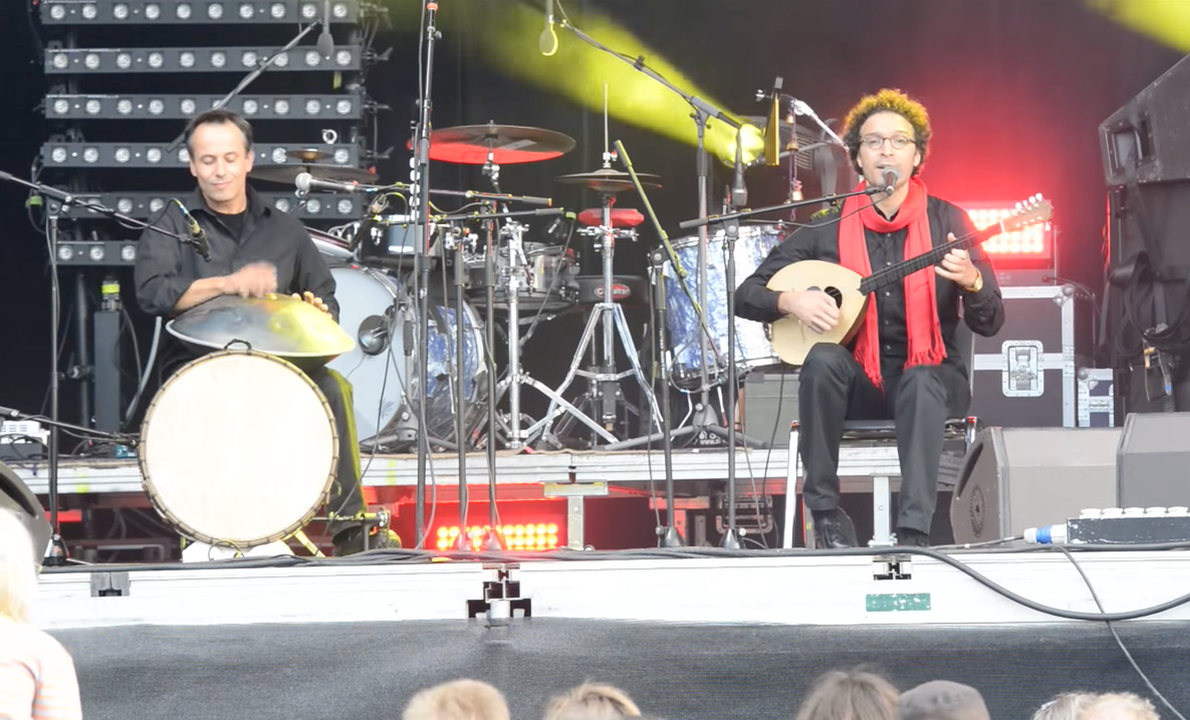
Vienna, Austria, October 5, 2015: An estimated 100,000 people are gathered at Heldenplatz in front of the Hofburg Palace in the historic city center, to attend the “Voices for Refugees” concert. The event is organized to raise public awareness about the refugee movement toward Europe. On stage is Salah Ammo, a Syrian-Kurdish singer holding his bouzouq, a long-necked, fretted string instrument commonly played in Syria. He is preparing to perform alongside Peter Gabis, an Austrian percussionist, overtone singer, and player of the hang, a melodic steel percussion instrument (see Figure 6). Ammo greets the audience in four languages – German, English, Arabic, and Kurdish – linguistically embracing those present while simultaneously expressing his own complex entanglements of cultural belonging. He explains to the crowd that he stands on stage not only as a musician but also as a refugee from Syria now living in Austria. Expressing gratitude for the overwhelming support, he declares: “It is a great feeling to see the people of my new home welcoming other refugees here!”13
Figure 6. Salah Ammo (right) and Peter Gabis (left) at the concert Voice for Refugees, October 5, Vienna, Austria (still by the author from a YouTube video created by Schwaiger 2015).
The event unfolded in the aftermath of a tragic incident that had shaken Austrian society. Just over a month earlier, the police had discovered a truck abandoned near Vienna containing the bodies of 71 men, women, and children, who had suffocated to death while attempting to reach safety in Europe. This tragedy was followed by German Chancellor Angela Merkel’s announcement of Germany’s willingness to accept thousands of asylum seekers, triggering a wave of mass border crossings into Austria by migrants previously stranded in Hungary. In response, civil society actors, including NGOs, activists, artists, and ordinary citizens, mobilized across Austria to welcome refugees. This widespread civic engagement became known as Willkommenskultur (welcoming culture), and, as exemplified by the Voices for Refugees concert, was often expressed through musical interventions (see also Brunner 2022).
Back on stage, Ammo and Gabis open their performance with a bilingual song titled “Ṣabāḥkun Ḥurriyyah – Roja û Azadî be” (“Good Morning, Freedom”). Composed by Ammo, the melody and orchestration for stage performance create a contemplative mood that emphasizes listening over audience participation. The lyrics, also by Ammo, alternate between Arabic and Kurdish, containing nuances that only Arab and Kurdish speakers in the audience are likely to catch:14
Gather your morale, for there are important tasks ahead, the country needs a lot of rebuilding.
Azadî tê êdi nema zilm û zor
Freedom is coming; no more oppression and violence.
Maf xwiyabû û mizgînî nema ji me dûr
Rights have appeared, and the good news is no longer far from us.
Xortno rabin, keçno rabin, rakin ala kesk û sor
Young men, young women, raise the green and red flags.
Ammo’s song is characterized by its optimistic political message, challenging authoritarianism in Syria. By invoking “ḥurriyyah” and “azadî,” he expresses his personal commitment to the values of democracy and freedom of expression, both of which were brutally suppressed in Syria, ultimately forcing him into exile. The use of both Arabic and Kurdish adds a deeper dimension. On one level, Ammo asserts his right to express himself in his long-suppressed first language. Simultaneously, this symbolic move suggests the possibility of reconciliation between Syrian Arab and Syrian Kurdish communities, reflecting the spirit of cross-community solidarity during the initial phase of the Syrian uprising. In this way, Ammo performs both his cultural identity as a Kurd and his national identity as a Syrian. However, within the context of his staged performance in Vienna, unique conditions arise for the resonance of Ammo’s political message. By addressing a mass audience representing Austrian society, rather than the politicized Syrian opposition exclusively, Ammo emerges as a musical citizen, discursively, sensorially, and affectively embodying the lived experiences of those who do not enjoy the same rights as formal citizens.
Salah Ammo was born in al-Darbasiyah, a small town in northeastern Syria near the Turkish border, within the Al-Hasakah Governorate, an area distinguished by its ethnic diversity, including significant Kurdish, Arab, and Assyrian populations. From an early age, he was immersed in his community’s Kurdish musical traditions, singing folk and popular songs and playing the bouzouq, a long-necked stringed instrument. However, due to state-imposed restrictions on the public expression of Kurdish culture, his musical activities were largely confined to private and communal settings. Determined to pursue a professional career in music, Ammo enrolled at the Higher Institute of Music in Damascus, graduating in 2004 with a degree in bouzouq performance. His public career in Syria began in 2007 with the formation of the ensemble Joussour (Bridges), which garnered both national and international recognition. As the violence in Syria intensified in late 2011, he left the country to pursue studies in ethnomusicology in the United Kingdom and eventually arrived in Austria as an asylum seeker in 2012, spending several weeks in refugee camps before being granted refugee status in 2013.
Salah Ammo was among the first wave of Syrians to flee the war and seek asylum in Austria. From 2014 onward, the Syrian presence in Austria grew rapidly, making the country one of the most sought-after destinations for asylum in Europe. Syrian asylum applicants, however, have faced significant challenges related to social prejudice and xenophobia, reflecting broader political tensions at the federal level (Konle-Seidl 2018). These attitudes have been reinforced by a long-standing far-right movement that, since the 1990s, has shaped public discourse through populist rhetoric, shifting Austria’s political landscape to the right. Austria also maintains one of Europe’s most restrictive citizenship laws (Çınar 2010), leaving refugees politically disenfranchised for extended periods. Even when granted, citizenship remains conditional and revocable, unlike citizenship by descent. This imbalance perpetuates a host-guest dynamic in which refugees are expected to integrate into a society that rarely acknowledges their perspectives (Rupnow 2017). The assimilationist thrust of Austria’s integration policy, linking citizenship to a narrowly constructed national identity, contributes to the dehistoricization and depoliticization of refugees’ experiences, institutionalizes cultural othering, and heightens the risk of marginalization and discrimination upon arrival.
Nevertheless, the political and cultural mobilization of Syrians in exile does not depend on formal citizenship. In Vienna, as in Thessaloniki, many Syrians have engaged in protests, grassroots organizing, and opposition initiatives addressing both the situation in Syria and broader socio-political issues in Austria and Europe, as exemplified by the activities of the Freie Syrer Koordination in Österreich (“Free Syrian Coordination in Austria”). Cultural and humanitarian initiatives, including the Arab-Austrian Women’s Organization and Vienna’s first oriental orchestra and choir, NAI, have advanced peace-building as well as cultural representation and diasporic belonging among Syrian migrants. Vienna has also become a hub for intercultural and minority activism through spaces such as Brunnenpassage and Brotfabrik, festivals like Salam Musik, networks such as D/Arts – Project Office for Diversity, and organizations including Kulturen in Bewegung (Cultures in Motion) and Fremde werden Freunde (Strangers Become Friends). Together, these initiatives provide platforms for cultural exchange and civic engagement among refugees, migrants, and other marginalized communities, thereby challenging exclusionary politics and discourses
For Syrian musicians such as Salah Ammo, both diaspora cultural initiatives and engagement with Austrian intercultural platforms have been vital for sustaining artistic and professional continuity. However, while these frameworks promote visibility and inclusion through artistic means, they often fail to engage with the explicitly political agendas of diaspora communities. In this context, Ammo’s work challenges this separation by introducing politically charged songs to broader Austrian audiences, thereby re-politicizing the Syrian refugee experience beyond overly depoliticized intercultural narratives.
Ammo’s politicized artistic approach developed in tandem with his efforts to reestablish his career in Austria, contributing to the emergence of a small yet active Syrian migrant music scene. In October 2014, he and other Syrian musicians participated in “Syrian Culture Days – A Celebration of Life and Arts,” the first Austrian festival explicitly dedicated to Syrian culture, organized by the Arab-Austrian Women’s Organization. The following year, he launched “Syrian Links,” a collaborative project between Syrian and Austrian musicians supported by Kulturen in Bewegung, designed to support Syrian artists to advance their creative trajectories in Austria.
In 2014, Salah Ammo released his first album produced in Austria, called Assi: The Story of a Syrian River, in collaboration with Peter Gabis. By that time, the duo had already garnered considerable recognition within Austria’s world music scene, having reached the finals of the 2013 Austrian World Music Awards. The album interweaves Syrian Arabic and Kurdish musical traditions with innovative compositional and orchestration elements that resonate with diverse audiences. However, as Ammo explained in our interview (July 13, 2020), the purpose of the album went beyond personal expression. Rather, it aimed at keeping Austria’s public attention focused on Syria’s ongoing tragedy and the displacement of its people. Several tracks, including the song performed at the “Voices for Refugees” concert, address themes of the Syrian uprising, the resulting conflict and displacement, and the struggles faced by Syrian Kurds, positioning the album as a form of musical-political intervention.
The album’s title track, “Assi” (Ammo and Gabis 2014), named after the river that flows through the Syrian city of Hama, exemplifies Ammo’s intention. The recording features Salah Ammo on bouzouq and vocals, accompanied by Peter Gabis on percussion. The melody of the song is drawn from a folk song from Hama, yet the lyrics are reworked to cast the waters of the Assi River as material, cultural, emotional, and eventually political resources. Initially invoked as a lifeline for the city’s inhabitants, the river is then addressed as a sorrowful witness to martyrdom and Syrians’ forced displacement. According to Ammo’s explanation in the album booklet,
Assi means “against” because it is the only river in Syria that flows from the south to the north. In times of peace, it drives the waterwheels (Nuayir) of the city. Since 2012 it has been filled with corpses. One of them was the Syrian singer al-Kashush. He was the first artist who sang the song “irhal, irhal ya Bashar” (leave, leave, oh Bashar). The song Assi is a dialogue between the singer and the river about the suffering of the Syrian people in their struggle for freedom. The song is an outcry about the tragedy of the Syrian civilians who helped so many refugees to resettle in Syria and now becoming refugees themselves. (Ammo 2014: 7)15
Situated within the broader landscape of politicized Syrian musical expression in exile, Salah Ammo’s album Assi nonetheless occupies a distinct position. While drawing parallels with themes present in protest songs such as “Jannah, Jannah, Jannah” or “Bi-ḥuzn wa-al-rīḥ taṣfar min warā al-bībān” – typically performed during demonstrations by Syrian activists – Assi departs from these participatory repertoires and enters the representational stage of Austria’s world music scene. This shift extends Syrian political music to new audiences, beyond the confines of diasporic oppositional networks. By using music to recount the Syrian tragedy and the repression of the Kurdish people, Ammo re-politicizes his refugee experience against the depoliticizing thrust of humanitarian discourse. Simultaneously, he urges intercultural platforms in Vienna to engage more meaningfully with political realities that extend beyond Austrian domestic concerns. In doing so, he enacts a form of musical citizenship that bridges Syrian and Austrian contexts, foregrounding their interconnectedness and ultimately challenging conventional notions of political belonging defined by territorial, national, or diasporic boundaries.
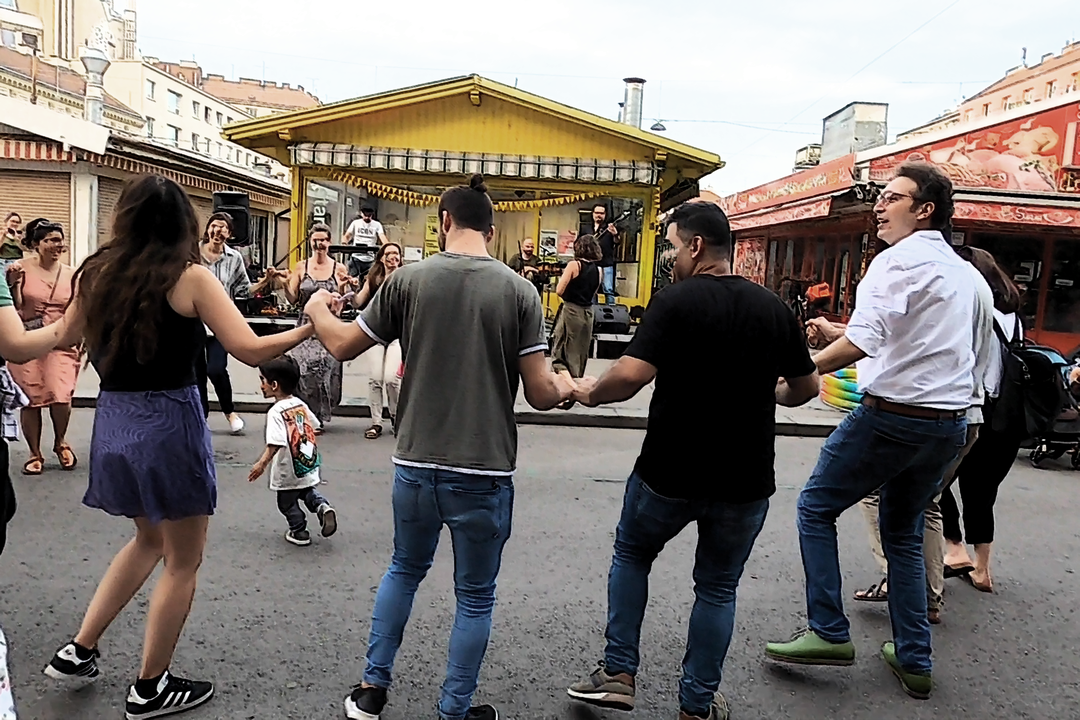
Nonetheless, as Ammo noted in our interview (July 13, 2020), following the release of Assi he consciously sought to avoid being narrowly identified with Syria-related political themes, with his artistic trajectory increasingly encompassing a broader spectrum of aesthetic and thematic concerns. This diversification, however, does not signal a retreat from his cross-contextual political commitments; rather, these commitments re-emerge in new forms. In 2017, for instance, he launched the project-based band Dabke-Dilan, conceived as a response to the rise of far-right populism and xenophobic discourse in Europe following reports of widespread sexual harassment of women during the 2015–2016 New Year’s Eve celebrations in Cologne. Dabke-Dilan sought to bring together native-born Austrians and newly arrived Syrian refugees – both Arabs and Kurds – through participatory dance performances set to popular Arab and Kurdish shaʿbiyya music. Frequently staged in ethnically diverse districts of Vienna, such as Floridsdorf and Favoriten, these performances created spaces for inter-community encounters, generating joyful moments of shared music, dance, and embodied affect (see Figure 7). While not framed as protest, such events mobilize participatory dance to foster inter-community solidarity – reconfiguring class, gender, cultural and ethnic boundaries, and hierarchies. In doing so, they intervene in spheres of leisure and shared public space, shaping how urban publics imagine and claim the city. Ammo’s work eventually demonstrates how music can enact new modalities of political belonging, articulating and negotiating urban citizenship through sonic and embodied expressions.
Figure 7. Vienna, June 22, 2023. Concert of the band Dabke-Dilan in the outdoor area in front of the social and intercultural space called Stand 129, near Viktor-Adler-Markt in Favoriten (10th district). Salah Ammo (right) has left the stage to join the circular dance unfolding in the middle of the street (photo by the author).
Conclusion: Re-politicizing the Syrian Refugee Experience Through Music
This article has explored how the musical reverberations of the Syrian revolution extend into European contexts, demonstrating how Syrian forced migrants use music to articulate political and social belonging and to enact alternative modes of citizenship throughout processes of displacement and resettlement. Despite differing geographic, temporal, and sociopolitical settings, from the squares of Homs to the refugee camps of Thessaloniki or the intercultural venues of Vienna, the examples discussed share a common thread: they index, preserve, and transmit narratives and memories of collective resistance, solidarity, and resilience in the face of oppression and sociopolitical marginalization. Although this sequence – uprising → forced migration → resettlement – might appear chronological at first glance, the songs themselves, as texts, including lyrics and music, and as performances with embodied, sensorial, and affective affordances, operate beyond linearity, exemplifying what Bal (2011: 225) calls heterochrony: a temporal shelter for heterogeneous, multisensate, and multitemporal memories enacted in the present, allowing past and present to coexist. From this perspective, Syrian protest songs can be perceived as living, mobile archives that record past suffering and envision future possibilities, allowing for individual and collective transformation within the very present of their enactment, despite spatial and temporal contextual ruptures.
In Homs, protest songs drew on familiar melodies and assumed distinctly performative dimensions, mobilizing and uniting protesters through participatory chants and circular chain performances that not only expressed dissent but enacted participants as emergent political subjects, under the threat of sniper fire. These embodied performances forged a shared sense of political community and a collective sense of “becoming one,” solidifying commitment to the revolutionary nationhood and enabling individuals to imagine themselves as part of a larger, cross-sectarian citizenry, prepared to face death in defiance of dictatorship. The figure of the protest singer emerged powerfully in this context, with individuals such as Abdul Baset al-Sarout and Ibrahim al-Qashoush becoming iconic symbols of popular heroism, particularly after their violent deaths and despite the ambiguity surrounding their backgrounds. Songs like “Jannah, Jannah, Jannah,” inscribing patriotic and religious connotations, evolved into informal anthems of the Syrian revolution, acting as a unifying thread across oppositional factions. Even as the initial uprising gave way to protracted conflict, the legacy of these protest songs endured, serving as a common grassroots resource and sustaining emotional and political continuity for thousands of Syrians forced into exile.
In Thessaloniki, Syrian protest music was reconfigured in the context of displacement, functioning as a means of reclaiming political agency amid marginalization and the constraints of refugee camp life. Protest singers such as Ismail Gadaan repurposed songs like “Bi-ḥuzn wa-al-rīḥ taṣfar min warā al-bībān,” originally performed in Raqqa, to confront the harsh realities in the camps, transforming spaces often perceived as mere warehouses of human lives into hyper-politicized spaces of resistance. Alongside other young Syrians, Gadaan mobilized the discursive, sensorial, affective, and performative registers of Syrian protest songs to enact themselves as emerging citizens. These musical enactments, grounded in the values of the Syrian uprising, not only forged audible and visible communities of solidarity among Syrian migrants and their allies but also repositioned refugees from passive subjects under the UN and EU refugee frameworks to active claimants of civil, social, and political rights.
In Vienna, the core demands of the Syrian revolution – freedom and dignity – continue to reverberate, with political song remaining central to diaspora opposition activism. Within this landscape, artists like Salah Ammo use their music to engage politically with their new social environments, amplifying both the ongoing Syrian struggle and the lived experiences of refugees to broader, non-Syrian audiences. With songs such as “Ṣabāḥkun Ḥurriyyah – Roja û Azadî be” or “Assi,” he evokes collective experiences of loss and despair while simultaneously expressing the determination of Syrians to continue pursuing justice. While the Arabic and Kurdish lyrics speak directly to Syrian audiences, Ammo’s integration into Austria’s world music scene allows his music to serve as a broader call for solidarity and understanding, with the stories behind the songs often introduced in German or English. Now an enfranchised Austrian citizen, Ammo continues to produce politically and socially conscious music across borders and contexts. In doing so, he enacts a form of transnational musical citizenship, operating between Syria and Austria, thus contributing to a shared political imagination committed to democratic ideals and human rights.
By centering Syrian political and protest songs, this article advances an ethnomusicological approach to forced migration that re-politicizes the refugee condition, challenging dominant humanitarian and integration discourses that tend to frame refugees primarily within depoliticized narratives of victimhood or cultural representation. This approach considers the intersections of music and political expression in the discursive, sensorial, affective, and performative registers of music, which shape and are shaped by the ways in which individuals articulate politics of belonging and imagine, negotiate and exercise political and social power. Such registers constitute critical resources for marginalized individuals and groups, enabling them to mobilize political agency, bridge past and present struggles, and articulate new claims to political, cultural, and civil rights, ultimately contributing to musical enactment of non-institutional modes of citizenship within and beyond the nation-state.
Nevertheless, while music plays a crucial role in re-politicizing the refugee experience and enacting alternative forms of citizenship, this process does not necessarily ensure that such acts will translate into institutional reforms or more just and inclusive systems. The suspension of asylum applications following regime changes in Syria underscores the ongoing precarity of refugees’ political status and raises pressing questions: Are musical and dance performances primarily symbolic enactments that reconfigure the politics of belonging on an imagined or affective level, while material political change is achieved through other channels?
The answer may lie in recognizing that the re-politicizing potential of music depends not only on the capacity of marginalized and disenfranchised individuals to enact musical performances of citizenship, but also on the ways these acts are received, interpreted, and responded to by actors in different positions of power. For music to exert influence beyond the symbolic or the direct affective realm of performance and contribute to tangible policy transformations, the articulation of rights claims through performative means must be met with what Heidenreich (2019: 279) conceptualizes as “politicizing listening,” a mode of engagement that constitutes a political act of response. Within this framework, ethnomusicologists hold a critical responsibility: to attune their analytical and listening practices to the political registers embedded in musical expressions, and to interrogate these expressions as sites of agency, paying close attention to the claims they articulate and the possibilities for action they invoke, both within and beyond institutional frameworks. Crucially, this also entails a willingness to engage with such claims, not merely as observers or interpreters, but as ethically and politically responsive participants. This article seeks to contribute to these ends.
Acknowledgements
This article owes its existence to the invaluable accounts of Ismail Gadaan and Salah Ammo, to whom I am deeply grateful for sharing their stories and perspectives. I am also especially thankful to Anja Brunner and her team for organizing the 2023 conference “Music, Migration, Belonging/s in 21st-Century Europe,” where the initial ideas for this article were first presented, and for her generous feedback on the early drafts of this manuscript. My deepest gratitude also goes to Mohammed Khattab for his help with the translation and transliteration of Arabic lyrics; to Julie Northey for her thorough English proofreading; to Malik Sharif for his editorial support throughout the publishing process; and to the anonymous reviewers, whose insightful feedback greatly improved this article.
This research was funded in part by the Austrian Science Fund (FWF) [10.55776/Z352].
The author uses the ALA-LC system to romanize key Arabic terms and lesser-known personal names and landmarks. Standardized English forms are used for more commonplace Arabic names, cities, and locations (e.g. Ismail, Homs, and Tahrir Square). When transliterating songs performed in Syrian dialects, adjustments are made to ensure the romanized text accurately reflects their pronunciation.↩︎
Christidis (2025) provides footage of the Vienna demonstration on December 8, 2024.↩︎
In Syria, the ṭabl refers to a large, cylindrical double-headed drum played with sticks, which is also known as a davul. It is commonly used in traditional ensembles, particularly those that accompany the dabke dance, providing the rhythmic foundation.↩︎
The lyrics of this particular rendition of “Jannah, Jannah, Jannah” have been translated by native speaker Mohammed Khattab, who also edited the transcription.↩︎
Al-Khayyāṭ (1982) is a video of the 1982 version of “Jannah, Jannah, Jannah.”↩︎
According to Feng and Rizkallah (2025), Ayman al-Masri is a largely unknown amateur lyricist from Homs, who became the principal songwriter for Al-Sarout, creating around 130 songs and chants, including the popular protest anthem “Jannah, Jannah, Jannah.”↩︎
Cast out by her family and persecuted by the regime’s security forces, Fadwa Suleiman fled Syria to Paris, where she died of illness in 2017, at the age of 47.↩︎
Al-Sarout’s early involvement in the armed opposition is documented in the 2013 Syrian-German documentary The Return to Homs, by Syrian-Kurdish director Talal Derki.↩︎
A video with a mass performance of “Jannah, Jannah, Jannah” in the city of Hama, Syria, on December 13, 2024, is available at Sky News Arabia (2024).↩︎
The original Arabic lyrics of “Bi-ḥuzn wa-al-rīḥ taṣfar min warā al-bībān” were provided by Ismail Gadaan and subsequently translated into English by Mohammed Khattab, who also adapted the transliteration to reflect the pronunciation used in the performance.↩︎
In 2021, Ismail’s brother, Ahmed Gadaan, and his wife were assassinated in their apartment in Syria by unknown perpetrators. Ismail expressed his wish for his brother to be acknowledged by his full name as the song’s author, considering this an homage to his memory.↩︎
In Syria, dabke describes a traditional participatory chain dance characterized by synchronized stomping of the feet, primarily performed at weddings and other social celebrations. A skilled dancer leads the chain, setting the pace of the group. The dance is also strongly connected to notions of heritage, national and regional identity, political expression, and performances of masculinity (see Silverstein 2024).↩︎
The information is drawn from the YouTube video “Voices for Refugees - SALAH AMMO & PETER GABIS – Vienna” (Schwaiger 2015).↩︎
The original Arabic and Kurdish lyrics of the song “Ṣabāḥkun Ḥurriyyah – Roja û Azadî be” were drawn from Ammo (2014: 9). They were translated with the assistance of AI translation services and subsequently reviewed by Salah Ammo for accuracy, while Mohammed Khattab proofread and adapted the transliteration.↩︎
Ibrahim al-Kashush or al-Qashoush (1977–2011) was a working-class man from Hama, who became known for allegedly composing and performing the protest song “Yāllā irḥal yā bashār” (“Come on, Bashar, leave”) during the Syrian protests. His body was found in the Assi River with his throat slit, a murder widely attributed to regime forces, and he was posthumously honored as the “Nightingale of the Revolution” (Vicente 2013). However, in 2016, Abdul Rahman Farhood, a refugee in Europe, claimed to be the actual creator and performer of the song, disputing al-Qashoush’s role and the circumstances of his death (Harkin 2016). In December 2024, the news agency Almodon confirmed al-Qashoush was killed but that he was not the iconic protest singer, citing a video of Farhood performing in Europe for Hama residents after the Assad regime’s collapse (Kasah 2024).↩︎
References
Absaroka, Ruard. 2023. “Music and Urban Migration: The City, Mobile Ethnography, and Affective Citizenship.” In The Routledge Handbook of Music and Migration, edited by Wolfgang Gratzer, Nils Grosch, Ulrike Präger, and Susanne Scheiblhofer, 333–362. London: Routledge. https://doi.org/10.4324/9781003309437-52
Abu-Lughod, Lila. 1990. “The Romance of Resistance: Tracing Transformations of Power Through Bedouin Women.” American Ethnologist 17(1): 41–55.
Agier, Michel. 2011. Managing the Undesirables: Refugee Camps and Humanitarian Government. Cambridge: Polity Press.
Al Kabbani, Kareem, and Tom Western. 2020. “The Movement Exists in Voice and Sound: Political Reverberations between Damascus and Athens.” In Sonic Urbanism: The Political Voice, edited by &beyond collective, 20–27. London: Theatrum Mundi.
Ammo, Salah. 2014. Liner notes to Salah Ammo and Peter Gabis, Assi: A Story of a Syrian River. N.p.: Be Now Records BNR 14-01.
Athamneh, Waed, and Caroleen Marji Sayej. 2013. “Engaging the Authoritarian State: Voices of Protest in Syria.” Journal of Arabic and Islamic Studies 13: 169–190. https://doi.org/10.5617/jais.4632
Bader Eddin, Eylaf. 2023. Translating the Language of the Syrian Revolution (2011/12). Berlin; Boston: De Gruyter. https://doi.org/10.1515/9783110767698
Bal, Mieke. 2011. “Heterochrony in the Act: The Migratory Politics of Time.” In Art and Visibility in Migratory Culture: Conflict, Resistance, and Agency, edited by Mieke Bal and Miguel Á. Hernández-Navarro, 209–237. Amsterdam: Rodopi. https://doi.org/10.1163/9789042032644_014
Bayat, Asef. 2021. Revolutionary Life: The Everyday of the Arab Spring. Cambridge, MA: Harvard University Press.
Biddle, Ian D., ed. 2012. Music and Identity Politics. The Library of Essays on Music, Politics and Society. Farnham: Ashgate.
Biddle, Ian D., and Vanessa Knights, eds. 2016. Music, National Identity and the Politics of Location: Between the Global and the Local. Abingdon: Routledge.
Bohlman, Philip V. 1993. “Musicology as a Political Act.” Journal of Musicology 11(4): 411–436. https://doi.org/10.2307/764020
Boswall, Karen, and Ruba Al Akash. 2017. “Listening, Resistance and Mobile Phone Playlists: Musical Listening Practices of Syrian Women Living as Refugees in Northern Jordan.” Social Dynamics 43(2): 167–183. https://doi.org/10.1080/02533952.2017.1368437
Brune, Krista. 2015. “Subversive Instruments: Protest and Politics of MPB and the Nueva Canción.” Studies in Latin American Popular Culture 33: 128–145. https://doi.org/10.7560/SLAPC3309
Brunner, Anja. 2022. “Popular Music, Forced Migration from Syria, and Welcome Culture in Germany and Austria.” In Transformational POP: Transitions, Breaks, and Crises in Popular Music (Studies), edited by Beate Flath, Christoph Jacke, and Manuel Troike, 205–223. Berlin: IASPM D-A-CH. Accessed March 18, 2026. https://vibes-theseries.org/brunner-migration/
Christidis, Ioannis. 2022. “Singing and Dancing for Freedom of Movement: Enacting Citizenship and Resisting Forced Confinement in ‘Hotspot’ Refugee Camps in Thessaloniki, Greece 2016.” In Internment Refugee Camps: Historical and Contemporary Perspectives, edited by Gabriele Anderl, Linda Erker, and Christoph Reinprecht, 177–191. Bielefeld: transcript. https://doi.org/10.14361/9783839459270-013
Dillane, Aileen, Martin J. Power, Eoin Devereux, and Amanda Haynes. 2018. “Introduction: Stand Up, Sing Out: The Contemporary Relevance of Protest Song.” In Songs of Social Protest: International Perspectives, edited by Aileen Dillane, Martin J. Power, Eoin Devereux, and Amanda Haynes, 1–10. London: Rowman & Littlefield.
Dubois, Simon. 2013. “Street Songs from the Syrian Protests.” In Inverted Worlds: Cultural Motion in the Arab Region, edited by Syrinx von Hees, Nadia von Maltzahn, and Ines Weinrich. Beirut: Orient-Institut Beirut. Accessed March 18, 2026. https://perspectivia.net/receive/ploneimport_mods_00012329
El Zein, Rayya. 2017. “Resisting ‘Resistance’: On Political Feeling in Arabic Rap Concerts.” In Arab Subcultures: Transformations in Theory and Practice, edited by Tarik Sabry and Layal Ftouni, 87–112. I.B. Tauris. https://doi.org/10.5040/9781350985339
Fischlin, Daniel, and Ajay Heble, eds. 2003. Rebel Musics: Human Rights, Resistant Sounds, and the Politics of Music Making. Montréal: Black Rose Books.
García, Luis-Manuel. 2015. “At Home, I’m a Tourist: Musical Migration and Affective Citizenship in Berlin.” Journal of Urban Cultural Studies 2(1): 121–134. https://doi.org/10.1386/jucs.2.1-2.121_1
Habash, Dunya. 2021. “‘Do Like You Did in Aleppo’: Negotiating Space and Place Among Syrian Musicians in Istanbul.” Journal of Refugee Studies 34(2): 1370–1386. https://doi.org/10.1093/jrs/feab013
Halasa, Malu, Zaher Omareen, and Nawara Mahfoud, eds. 2014. Syria Speaks: Art and Culture from the Frontline. London: Saqi Books.
Hemetek, Ursula. 2015. “Applied Ethnomusicology as an Intercultural Tool: Some Experiences from the Last 25 years of Minority Research in Austria.” In The Oxford Handbook of Applied Ethnomusicology, edited by Svanibor Pettan and Jeff Todd Titon, 229–277. New York: Oxford University Press. https://doi.org/10.1093/oxfordhb/9780199351701.013.10
Heidenreich, Nanna. 2019. “Practices of Politicizing Listening (to Migration).” In Performing Citizenship, edited by Paula Hildebrandt, Kerstin Evert, Sibylle Peters, Mirjam Schaub, Kathrin Wildner, and Gesa Ziemer, 279–287. Cham: Palgrave Macmillan. https://doi.org/10.1007/978-3-319-97502-3_18
Isin, Engin F., and Greg M. Nielsen. 2008. “Introduction.” In Acts of Citizenship, edited by Engin F. Isin and Greg M. Nielsen, 1–12. London: Zed Books.
Issa, Sadam. 2018. “Ibrahim Qashoush’s Revolutionary Popular Songs: Resistance Music in the 2011 Syrian Revolution.” Popular Music and Society 41(3): 283–301. https://doi.org/10.1080/03007766.2016.1254712
Khalili, Laleh. 2007. Heroes and Martyrs of Palestine: The Politics of National Commemoration. Cambridge: Cambridge University Press.
Konle-Seidl, Regina. 2018. Integration of Refugees in Austria, Germany and Sweden: Comparative Analysis. Brussels: European Parliament. https://doi.org/10.2861/445101
Kurtişoğlu, Belma, Selda Öztürk, and Hussain Hazz. 2016. “Performing the Migration.” Edited by Mahanirban Calcutta Research Group and Paula Banerjee. Refugee Watch: A South Asian Journal on Forced Migration 48: 67–81.
Kyratsou, Chrysi. 2022. “Musical Citizenship as a Means to Disrupt Exclusions: Potentials and Limitations as Understood in Times of a Pandemic.” Citizenship Teaching & Learning 17(1): 145–154. https://doi.org/10.1386/ctl_00086_1
———. 2023. “Between Estrangement at Home and Marginalization by the Host: Tracing Senses of Belonging through Music.” Arts 12(3), 121. https://doi.org/10.3390/arts12030121
Lazar, Sian, and Monique Nuijten. 2013. “Citizenship, the Self, and Political Agency.” Critique of Anthropology 33(1): 3–7. https://doi.org/10.1177/0308275X12466684
Malkki, Liisa H. 1996. “Speechless Emissaries: Refugees, Humanitarianism, and Dehistoricization.” Cultural Anthropology 11(3): 377–404.
Martiniello, Marco. 2019. “Music and the Political Expression and Mobilization of Second and Third-Generation Immigrants in Urban Europe: Insights from Liège (Belgium).” Ethnic and Racial Studies 42(6): 994–1012. https://doi.org/10.1080/01419870.2019.1543891
McDonald, David A. 2010. “Geographies of the Body: Music, Violence and Manhood in Palestine.” Ethnomusicology Forum 19(2): 191–214. https://doi.org/10.1080/17411912.2010.507463
———. 2025. “Protest Song, Tradition, and the Performativity of Resistance in the Palestinian National Movement.” In The Oxford Handbook of Protest Music, online ed., edited by Noriko Manabe and Eric Drott. Oxford: Oxford University Press. https://doi.org/10.1093/oxfordhb/9780190653866.013.0005
O’Toole, Michael F. 2014. “Sonic Citizenship: Music, Migration, and Transnationalism in Berlin’s Turkish and Anatolian Diasporas.” PhD dissertation, University of Chicago.
Öğüt, Evrim Hikmet. 2021. “Music, Migration, and Public Space: Syrian Street Music in the Political Context.” Arts 10(4), 71. https://doi.org/10.3390/arts10040071
Omran, Mohamad, and Golan Haji. 2014. “Daily Occurrences.” In Syria Speaks: Art and Culture from the Frontline, edited by Malu Halasa, Zaher Omareen, and Nawara Mahfoud, 205–209. London: Saqi Books.
Parzer, Michael. 2021. “Double Burden of Representation: How Ethnic and Refugee Categorisation Shapes Syrian Migrants’ Artistic Practices in Austria.” Journal of Ethnic and Migration Studies 47(11): 2459–2476. https://doi.org/10.1080/1369183X.2020.1826297
Parzer, Michael, and Ana Mijić. 2024. “Continuity or Change? How Migrants’ Musical Activities (Do Not) Affect Ethnic Boundaries.” In Cultural Change in Post-Migrant Societies: Re-Imagining Communities Through Arts and Cultural Activities, edited by Wiebke Sievers, 39–58. Cham: Springer. https://doi.org/10.1007/978-3-031-39900-8_3
Pearlman, Wendy. 2017. We Crossed a Bridge and It Trembled: Voices from Syria. New York: Custom House.
Picozza, Fiorenza. 2021. The Coloniality of Asylum: Mobility, Autonomy and Solidarity in the Wake of Europe’s Refugee Crisis. Lanham: Rowman & Littlefield Publishers.
Präger, Ulrike. 2018. “Musically Negotiating Difference – Cross-Cultural Sounds of Empathy in Contemporary Germany.” In Musik und Migration, edited by Wolfgang Gratzer and Nils Grosch, 67–76. Münster: Waxmann.
Rahaim, Matthew. 2019. “Theories of Participation.” In Theory for Ethnomusicology: Histories, Conversations, Insights, 2nd ed., edited by Harris M. Berger and Ruth M. Stone, 219–232. New York: Routledge.
Rupnow, Dirk. 2017. “The History and Memory of Migration in Post-War Austria: Current Trends and Future Challenges.” In Migration in Austria, edited by Günter Bischof and Dirk Rupnow, 37–66. New Orleans: University of New Orleans Press. https://doi.org/10.2307/j.ctt1t89kvv.5
Sadiki, Larbi, ed. 2015. Routledge Handbook of the Arab Spring: Rethinking Democratization. Abingdon: Routledge.
Schiocchet, Leonardo. 2017. “Integration and Encounter in Humanitarian Tutelage.” In From Destination to Integration: Afghan, Syrian and Iraqi Refugees in Vienna, edited by Josef Kohlbacher and Leonardo Schiocchet, 9–35. Vienna: Verlag der Österreichischen Akademie der Wissenschaften. https://doi.org/10.1553/ISR_FB045s9
Shannon, Jonathan H. 2019. “From Silence into Song: Affective Horizons and Nostalgic Dwelling among Syrian Musicians in Istanbul.” Rast Müzikoloji Dergisi 7(2): 2169–2180. https://doi.org/10.12975/pp2169-2180
Silverstein, Shayna M. 2024. Fraught Balance: The Embodied Politics of Dabke Dance Music in Syria. Middletown: Wesleyan University Press.
Stokes, Martin. 2023. Music and Citizenship. New York: Oxford University Press.
Street, John. 2012. Music and Politics. Cambridge: Polity Press.
Syrian Observatory for Human Rights. 2021. “Total Death Toll: Over 606,000 People Killed Across Syria Since the Beginning of the ‘Syrian Revolution,’ Including 495,000 Documented by SOHR.” Syrian Observatory for Human Rights (website), June 1, 2021. Accessed March 18, 2026. https://www.syriahr.com/en/217360/
Turino, Thomas. 2008. Music as Social Life: The Politics of Participation. Chicago Studies in Ethnomusicology. Chicago: University of Chicago Press.
———. 2016. “Music, Social Change, and Alternative Forms of Citizenship.” In Artistic Citizenship: Artistry, Social Responsibility, and Ethical Praxis, edited by David Elliott, Marissa Silverman, and Wayne Bowman, 297–312. New York: Oxford University Press. https://doi.org/10.1093/acprof:oso/9780199393749.001.0001
Turner, Simon. 2016. “What Is a Refugee Camp? Explorations of the Limits and Effects of the Camp.” Journal of Refugee Studies 29(2): 139–148. https://doi.org/10.1093/jrs/fev024
UN High Commissioner for Refugees (UNHCR). 2012. “International Protection Considerations with Regard to People Fleeing the Syrian Arab Republic, Update I.” Refworld (website), December 2012. Accessed March 18, 2026. https://www.refworld.org/docid/50d457b12.html
Vicente, Victor A. 2013. “Viral Voices: Revolutionary Song, Social Media, and Youth Culture in the Arab Spring.” Bilgi Sosyal Bilimler Dergisi 2013, no. 2: 32–55.
Wedeen, Lisa. 1999. Ambiguities of Domination: Politics, Rhetoric, and Symbols in Contemporary Syria. Chicago: University of Chicago Press.
AhfadKhaled (@AhfadKhaled). 2011a. “حمص اعتصام الخالدية جمعة الزحف للساحات مع عبد الباسط ساروت وجنة يا وطنا 30 12 2011” [Homs, Al-Khalidiyah Sit-In, Friday of the March to the Squares, with Abdul Baset Sarout and the Song ‘Jannah, Oh Our Homeland,’ 30.12.2011]. Original video footage, YouTube, 5:45. Uploaded on December 31, 2011. Accessed March 18, 2026. https://www.youtube.com/watch?v=HficoTuqPwI
———. 2011b. “حمص اعتصام الخالدية جمعة الزحف للساحات بمشاركة الأحياء المجاورة” [Homs, Al-Khalidiyah sit-in, Friday of the March to the Squares, with Participation from the Neighboring Districts]. Original video footage, YouTube, 4:25. Accessed March 18, 2026. https://www.youtube.com/watch?v=B7-wByUq1jc
Aish Campaign (Live Campaign). 2020. “Blessed Ramadan. Despite the bleeding wounds, inevitably… Eid is coming.” Mural and photograph created in Kafr Nabl, Idlib, in 2020, by the Aish Campaign. Posted on the Facebook page “Idlibiyoon” on May 24, 2025. Accessed March 18, 2026. https://www.facebook.com/photo/?fbid=590336288354395&set=pb.100069250508069.-2207520000
Al-Khayyāṭ, Riḍā. 2018. “رضا الخياط، جنه جنه - عام ١٩٨٢” [Riḍā Al- Khayyāṭ, Jannah Jannah – Year 1982]. Music video, YouTube, 2:52. Uploaded by Iraq58 TV - ٥٨ قناة عراق (@iraq58), February 2, 2018. Accessed March 18, 2026. https://www.youtube.com/watch?v=sBBHgZKa-Lc
Al-Sarout, Abdul Baset. 2012. “Jannah, Jannah, Jannah.” Music audio, YouTube, 5:04. Uploaded by Syrie08syria (@syrie08syria), May 17, 2012. Accessed March 18, 2026. https://www.youtube.com/watch?v=wTn0W7FojcQ
Ammo, Salah, and Peter Gabis. 2014. “Assi.” Track 2 on Salah Ammo and Peter Gabis, Assi: A Story of a Syrian River. N.p.: Be Now Records BNR 14-01. Available on YouTube, 5:36. Uploaded by Salah Ammo, August 16, 2014. Accessed March 18, 2026. https://www.youtube.com/watch?v=hpxrIeeITO0
Christidis, Ioannis. 2016. Ismail Gadaan sings the protest song “Bi-ḥuzn wa-al-rīḥ taṣfar min warā al bībān” during the bus ride that takes the residents of the Oreokastro refugee camp to a protest gathering in the center of Thessaloniki. Field-recording. Thessaloniki, July 21, 2016. Accessed March 18, 2026. https://mm.publia.org/mm/article/download/46/version/46/97/522/audioexample1.mp3
Christidis, Ioannis (@ioannischristidis2080). 2025. “Vienna 08 12 2024 - Syrians Celebrate the Fall of the Assad Regime.” Original video footage, YouTube, 4:24. Uploaded on September 24, 2025. Accessed March 18, 2026. https://www.youtube.com/watch?v=JXqW0xKREwE
Raqqa Rev (@reakka2011). 2013. “الرقة 17-5-2013 جمعة 'استقلال القرار السوري' مظاهرة حي الثكنة” [Raqqa 5-17-2013 Friday “Independence of the Syrian Decision” Demonstration in Al-Thakana Neighborhood]. Original video footage, YouTube, 1:49. Uploaded on May 17, 2013. Accessed March 18, 2026. https://www.youtube.com/watch?v=wONwDaFVdlc
Schwaiger, Mario J. (@Soulhunter17). 2015. “Voices for Refugees - SALAH AMMO & PETER GABIS – Vienna.” Original footage of a live performance on October 3, 2015, YouTube 6:52. Uploaded on October 4, 2015. Accessed March 18, 2026. https://www.youtube.com/watch?v=vF7K0E6hlng
Anonymous A. Interview by the author (conducted in English). Vienna, March 2021.
Anonymous B. Interview by the author (conducted in English). Thessaloniki, October 25, 2016.
Ammo, Salah. Interview by the author (conducted in English). Vienna, July 13, 2020.
Gadaan, Ismail. Interview by the author (conducted with an Arabic-English interpreter). Online, July 21, 2020.
Author Biography
Ioannis Christidis received his Ph.D. in ethnomusicology from the University of Music and Performing Arts Vienna. His dissertation examined the role of music in the experiences of Syrian migrants during their journeys and resettlement in Europe. He is currently engaged in postdoctoral research focusing on religious music and sound in postmigrant urban contexts, as well as on electronic dance music genres, scenes, and spaces shaped by SWANA actors in Europe.


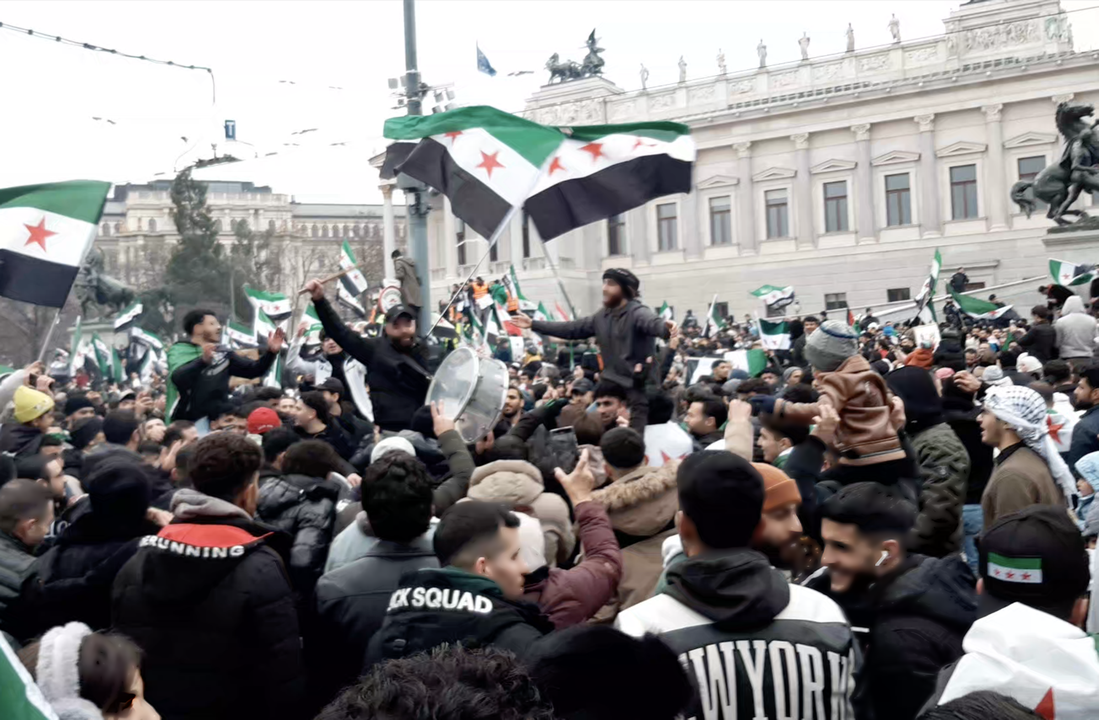
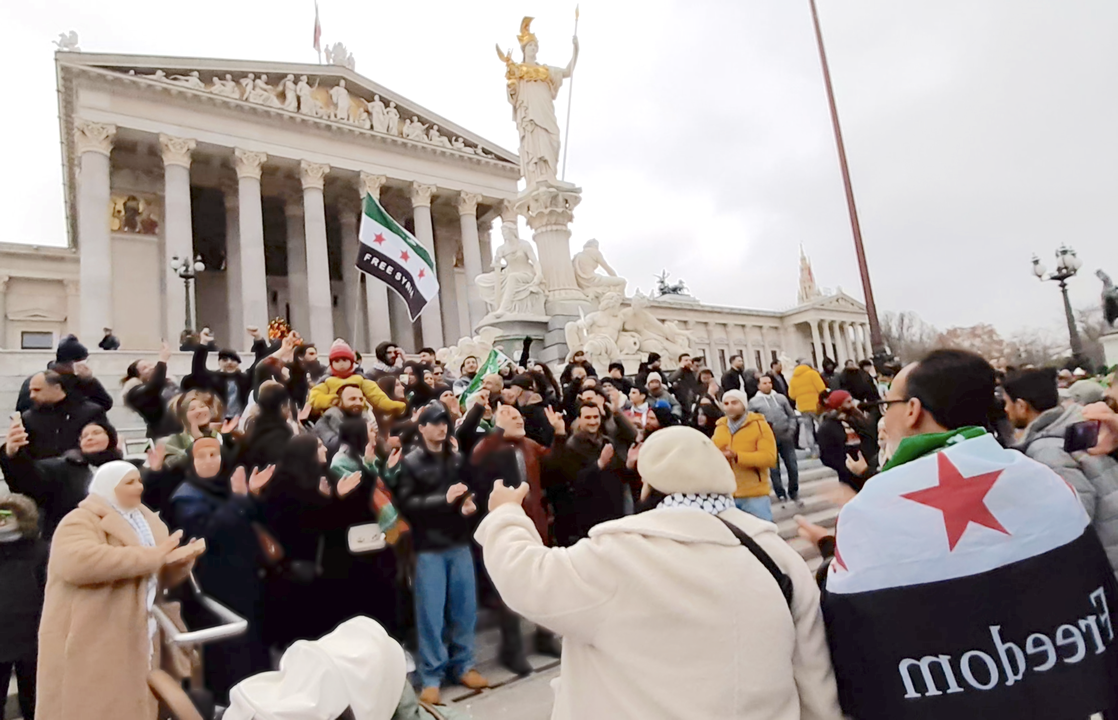
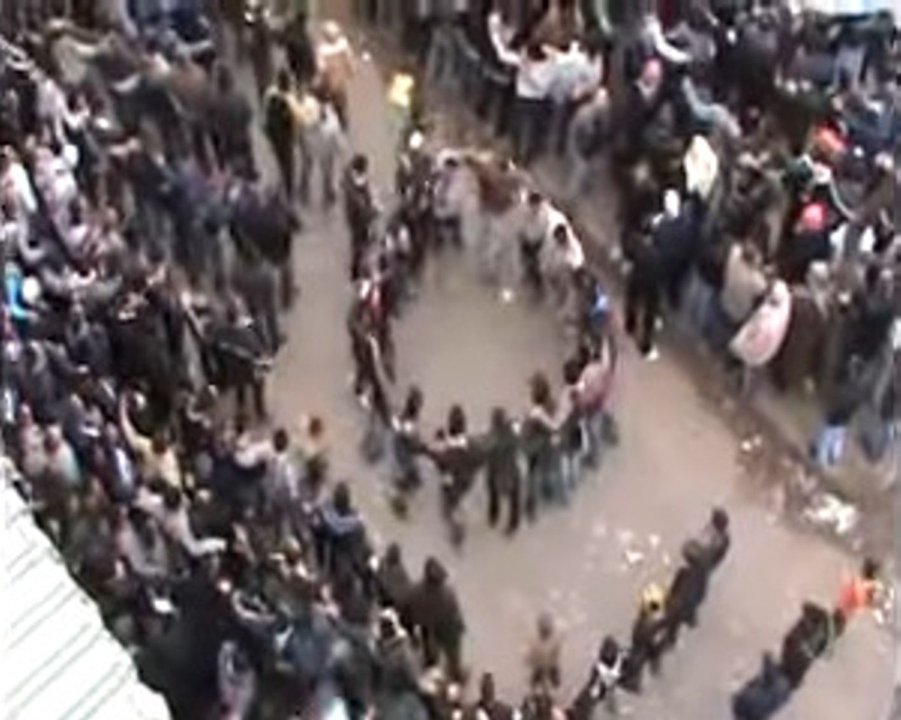
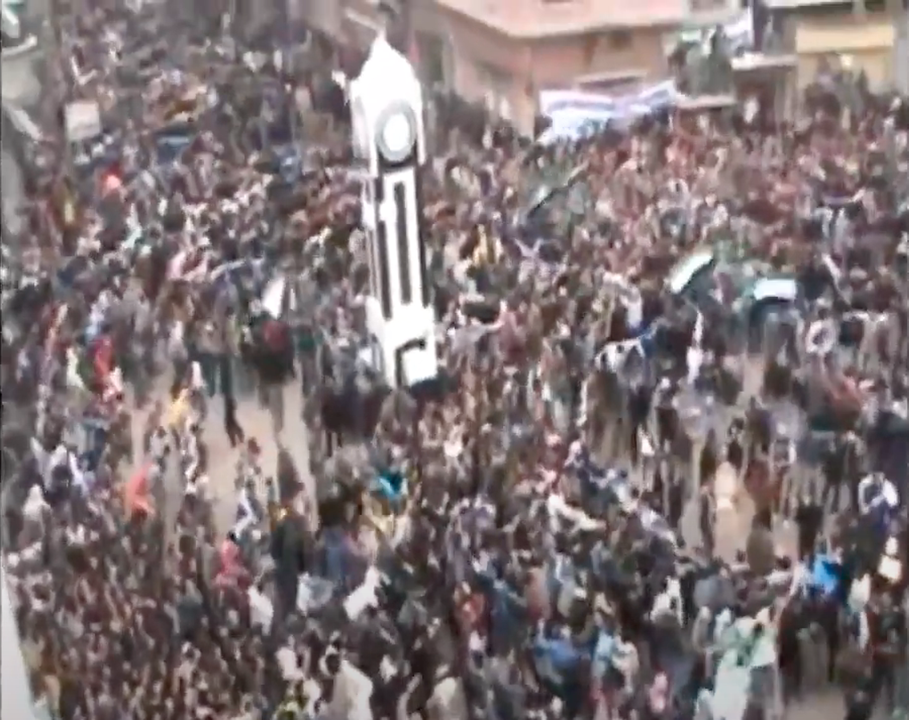
![Figure 4. Mural painted in 2020 by the Aish Campaign (Live Campaign), a grassroot political art collective in Kafr Nabl, Idlib province, depicts Abdul Baset al-Sarout against the backdrop of the Syrian revolu-tionary flag. The message reads: “Blessed Ramadan. Despite the bleeding wounds, inevitably. . . Eid is coming” (“Ramaḍān mubārak. Raghma al-jurūḥ al-nāzifah,lābud. . . yalffī al-ʿīd”; artwork and photo credit: Aish Campaign [حملة عيش] 2020, with kind permission).](https://mm.publia.org/mm/article/download/46/version/46/97/514/figure4.png)